
Almost nobody wants wood for what it is. They want it for how it looks: the warmth, the grain, the way a timber wall makes a hard modern building feel human. That is the whole appeal of wood cladding, and it is also the problem, because the look and the material come as a package, and the material is the part that fails. Real wood on a wall greys, checks, rots at the bottom course, and in a fire zone it is the thing code and insurers push back on hardest. This guide is about getting the wood-cladding look you actually want, and then choosing the version of it that still looks that way in twenty years.
So the honest question is not “wood or not,” it is “which path to the wood look costs you the least in upkeep, fire risk, and regret.”
The Quick Answer: Get the Look, Drop the Maintenance
Wood cladding is a look, not a single material, and you can get that look four ways: real softwood, thermally modified wood, composite, or wood-look aluminum. Real wood ages beautifully and then demands sanding and restaining forever; composite fades and carries no real fire rating; wood-look aluminum keeps the grain and the warmth while removing rot, refinishing, and combustibility. If you love the look but not the ladder work, aluminum is the version of wood cladding that holds.
| Way to get the wood look | The look | Rot / moisture | Fire | Upkeep | Lifespan |
|---|---|---|---|---|---|
| Cedar / redwood | The real thing | Rots, greys | Combustible | Sand and stain every 2 to 4 yrs | 15 to 30 yrs |
| Thermally modified wood | Real, darker tone | Better, still wood | Combustible | Recoat to hold color | 25 to 40 yrs |
| Composite / WPC | Close, can read plastic | Resists | Melts, no real rating | Low, but fades and sags | 20 to 30 yrs |
| Wood-look aluminum | Photoreal grain | Immune | Non-combustible (Class A) | Rinse occasionally | 40 to 50+ yrs |
The rest of this guide walks each path and then the design decisions that make the wood look land.
Wood Cladding Is a Look, Not a Material
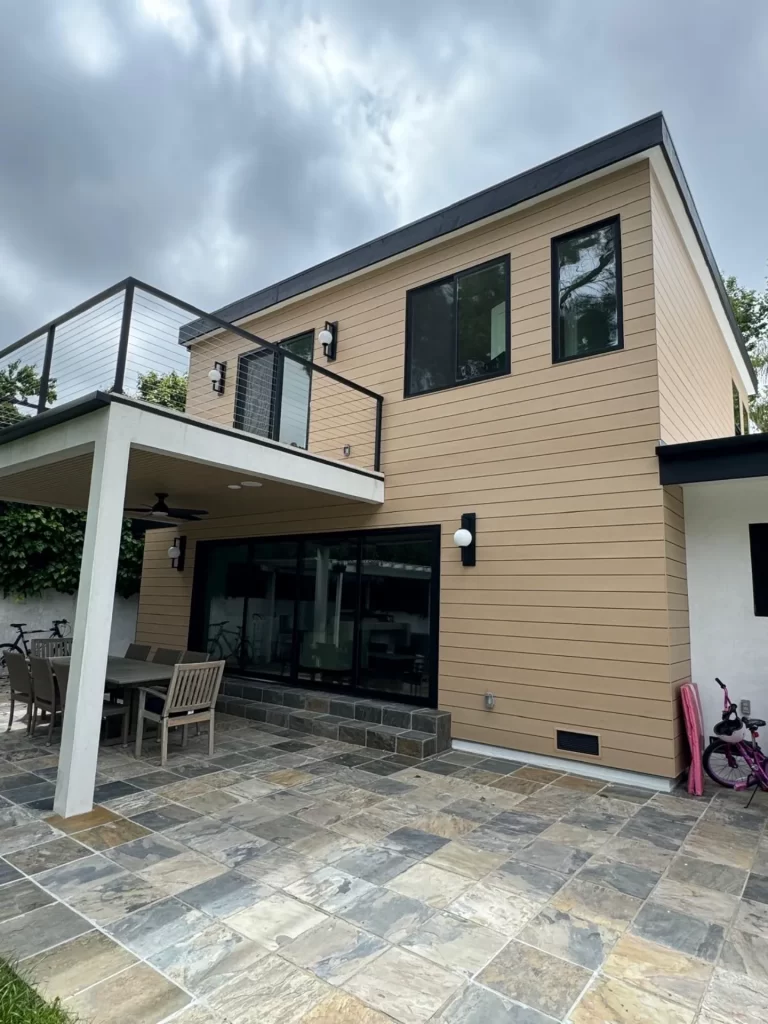
It helps to separate the two things people fuse together. One is the aesthetic: horizontal or vertical timber boards, a visible grain, a natural tone from pale oak to dark walnut. The other is the substrate doing the work behind that face. For most of history those were the same thing, so “I want the wood look” meant “I am signing up for wood maintenance.” That is no longer true. The look can now sit on a substrate that behaves nothing like wood, which is exactly what you want on an exterior wall that takes sun, rain, and the occasional ember.

Once you treat wood cladding as a look you are buying, the question stops being emotional and starts being practical: which substrate carries the grain, and what does it cost you to keep it looking new.
The Real-Wood Options, and Why the Look Fades
Natural softwoods like cedar and redwood are where the wood look comes from, and they are genuinely beautiful on day one. The catch is physics. Wood is hygroscopic, so it takes on and gives off moisture with the weather, which makes it cup, check, and split, and it rots and feeds insects at the end grain and the bottom courses. Left alone it greys within a season or two. To hold the original tone you sand and restain on a cycle that never ends, and you are doing it on a full wall, often at height.
Thermally modified wood is the upgrade: baking the timber drives out sugars and moisture, so it is more stable and more rot-resistant than raw cedar, and it starts out a rich brown. It is a real improvement, but it is still wood, so it still greys and still wants recoating to keep its color, and it is still combustible.
Composite and wood-plastic (WPC) boards attack the rot problem by mixing wood fiber with plastic. They resist moisture and need less upkeep, but the trade is honest to admit: up close many read as plastic rather than timber, they can fade and sag in sustained heat, and as a plastic-based product they carry no meaningful fire rating. In a wildfire region that last point is not a detail.
Wood-Look Aluminum: The Version That Holds
Wood-look aluminum takes the opposite route. Instead of starting with wood and fighting its weaknesses, it starts with aluminum and prints the wood onto it. The grain is applied through a sublimation process that bonds a photoreal timber image into the powder-coat finish, so from a normal viewing distance it reads as cedar, oak, teak, or walnut, not as metal. For how that finish is produced and how convincing it is, see our deep dive on the wood-grain aluminum finish.
Underneath the look, the material does what wood cannot. It does not absorb water, so it cannot rot, cup, or feed termites. It is dimensionally stable, so boards stay straight through heat and cold. The finish holds its color for decades with no sanding or staining, and the aluminum is non-combustible, tested to ASTM E136 and rated Class A under ASTM E84. Clicklad panels are 6063-T5/T6 aluminum with up to 80% recycled content, and they clip onto a rail system rather than being face-nailed. For the full service-life picture, see how long aluminum cladding lasts.
Choosing Your Wood: Tone, Grain, and Orientation
This is the fun part, and it is where a wood-cladding project is won or lost. The tone sets the mood: pale ash and white oak read calm and Scandinavian, teak and walnut read warm and rich, wenge and charred tones read dramatic and modern. Because the finish is applied rather than grown, the color is consistent board to board, with none of the lottery you get sorting through natural lumber.

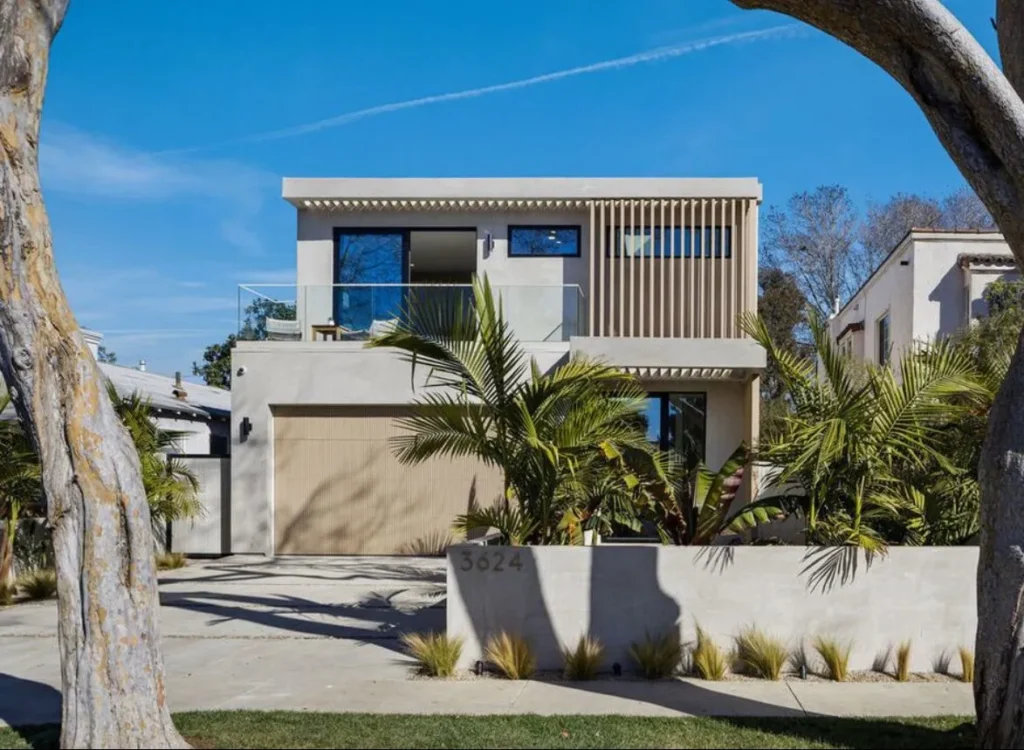
Orientation changes the feel as much as tone does. Horizontal boards stretch a facade and read traditional; vertical boards add height and a crisp, contemporary rhythm. The gap between boards matters too: a tight closed joint reads as a solid plane, while an open-gap or V-groove profile throws a shadow line that gives the wall depth. Those are design levers you set on purpose, not accidents of the material.
Fire Zones: The Wood Look You Are Actually Allowed to Build
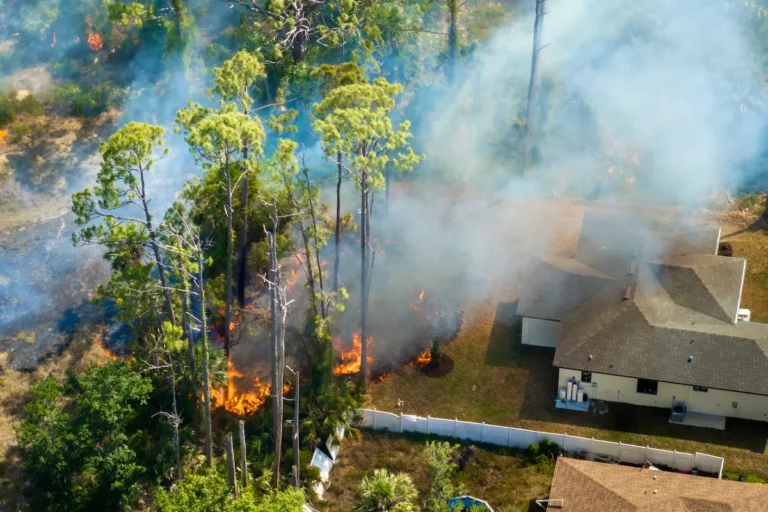
In much of California the wood look now collides with the building code. Wildland-urban interface rules under Chapter 7A push exterior walls toward non-combustible construction, and insurers increasingly refuse or surcharge combustible cladding on fire-zone homes. That rules real wood and plastic composites out of a lot of projects, or makes them very expensive to insure. A non-combustible wood-look aluminum wall is a direct way to keep the timber aesthetic and still pass. We cover the detail in our guides on whether aluminum siding is fire resistant and on WUI and Chapter 7A cladding in California.
Wrapping the Whole Building in One Wood Look
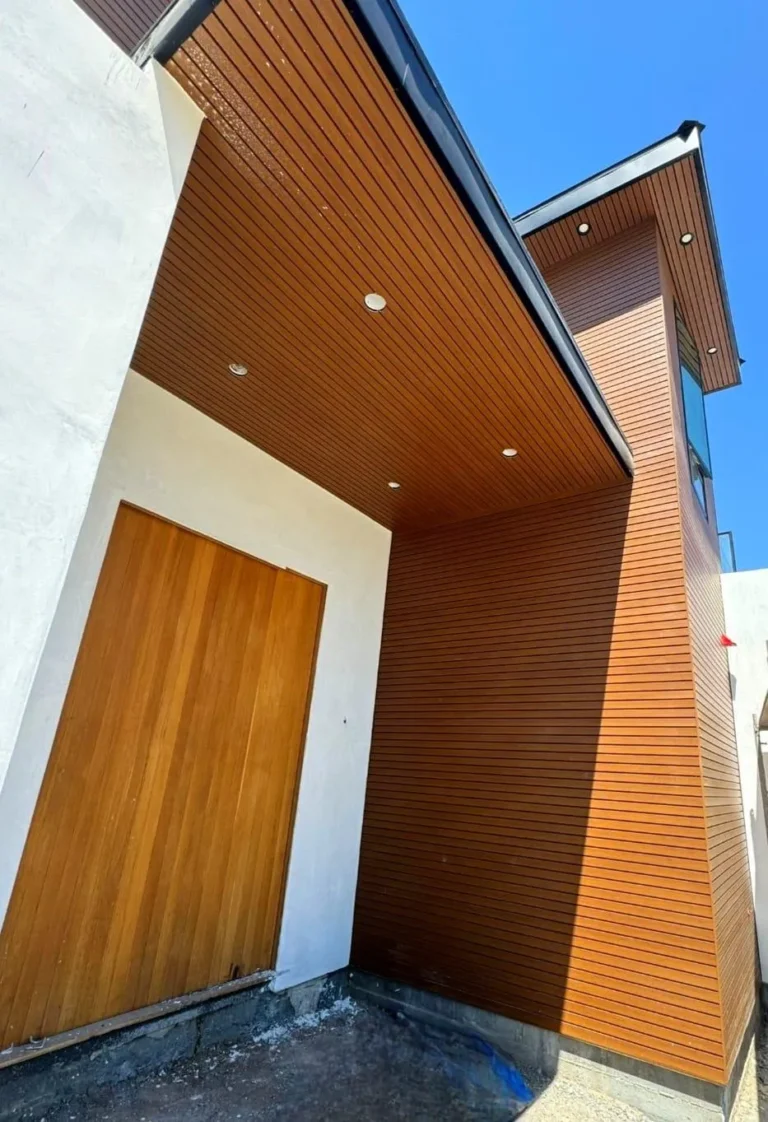
Wood cladding rarely stops at the wall. The look only reads as intentional when it carries onto the other planes of the building: the soffit under the eaves, the ceiling of a covered entry, the pergola over the patio. When all of those come from the same line, in the same wood tone, on the same click detailing, the building reads as one material wrapped around it rather than a wall with accessories.
That continuity is the whole idea behind Clicklad. The wall panels share finishes and the click system with the aluminum soffit at the eaves and the overhead shade structures, so the walnut on your facade is the exact walnut under your roofline. If you are still weighing the wall itself, our pillar on exterior cladding materials compares every option, and our breakdown of metal cladding versus wood and fiber cement explains why aluminum keeps winning the swap.
The same tone carries onto the aluminum pergolas and trellises over the patio, so the wall, the eave, and the shade structure all read as one wood look.
Installation at a Glance
Wood-look aluminum cladding clips onto supporting rails instead of being nailed board by board. The panels lock onto the rail with a concealed click, so there are no exposed fasteners breaking up the grain, and long, aligned runs stay straight across a tall facade. The same system carries the open-gap, closed-gap, and V-groove profiles, mixes wall and soffit on one detail, and lets a single panel be released later if it is ever damaged. Rail layout and spacing are set per wall and reviewed against local code.
The Bottom Line
Everyone who asks for wood cladding is really asking for the wood look. Real cedar gives it to you and then takes it back through greying, rot, restaining, and fire risk. Composite trades some of the upkeep for a finish that can read like plastic and still will not pass in a fire zone. Wood-look aluminum keeps the grain, the warmth, and the tone you chose, and removes the rot, the refinishing, and the combustibility, on a wall that still looks new decades later.
Want the wood look on a wall that lasts? Clicklad manufactures wood-look aluminum cladding, soffit, and shade systems in Gardena, California, in a full range of wood tones. Get in touch with our team and we will come back with the right tone, profile, and system for your project, or browse the range on our products page.
Frequently Asked Questions
What is wood cladding?
Wood cladding is the timber look applied to an exterior wall: horizontal or vertical boards with a visible grain and a natural tone. It can be real softwood like cedar, thermally modified wood, a wood-plastic composite, or wood-look aluminum that carries a photoreal grain. The look is the same; what differs is how the substrate holds up outdoors.
Is wood-look aluminum better than real wood cladding?
For most exterior projects, yes. Real wood looks beautiful but rots, greys, and needs sanding and restaining every few years, and it is combustible. Wood-look aluminum keeps the grain and tone, never needs refinishing, cannot rot or warp, and is non-combustible. Real wood wins only if you specifically want natural material and accept the upkeep.
Does wood cladding need a lot of maintenance?
Real wood and thermally modified wood do: they grey and need recoating on a cycle to hold their color. Composite needs less but can fade and sag. Wood-look aluminum needs almost none, an occasional rinse, because the color is a bonded powder-coat finish rather than a surface stain that breaks down.
Is wood cladding allowed in a California fire zone?
Combustible wood and plastic-composite cladding are often restricted or heavily surcharged by insurers in wildland-urban interface areas under Chapter 7A. Non-combustible wood-look aluminum keeps the timber appearance while meeting the push toward non-combustible exterior walls, which is why it is specified so often on fire-zone homes.
What wood tones does wood-look aluminum come in?
A full range, from pale ash and white oak through teak and warm walnut to dark wenge and charred tones. Because the finish is applied rather than grown, the color is consistent board to board, and the same tone can be carried from the wall onto the soffit and shade structures for one continuous look.