
A finished aluminum wall looks simple from the street, but what makes it work is the panel system behind the look: the profile, the finish, and the rail it clips onto. If you are specifying or buying aluminum cladding panels, those three choices decide how the wall reads, how fast it goes up, and how it performs for the next several decades. This guide walks what the panels are, the profiles and finishes to choose from, how the click-rail system installs, and where the panels belong.
The short version: aluminum cladding panels give you a wood or solid look on a non-combustible, low-maintenance wall that installs fast because the panels clip onto rails instead of being nailed up one board at a time.
The Quick Answer: What You Are Actually Choosing
An aluminum cladding panel is an extruded aluminum board with a powder-coat finish, usually in a wood-grain tone, that clips onto a rail system on the wall. You choose three things: the profile (the joint and shadow line between boards), the finish (wood-look tone or solid color), and the layout (horizontal or vertical). Everything else, the fire rating, the low maintenance, the long life, comes built into the aluminum.
| Panel profile | Joint and shadow line | Reads as | Common use |
|---|---|---|---|
| Open-gap | Visible reveal between boards | Contemporary, strong texture | Modern facades, feature walls |
| Closed-gap | Tight, nearly seamless | Clean, continuous plane | Large walls, soffits, minimal looks |
| V-groove | Defined V channel between boards | Crisp, classic board rhythm | Traditional-modern facades |
The rest of this guide explains each choice in order.
What an Aluminum Cladding Panel Is
An aluminum cladding panel is not a thin sheet or a composite board. It is a solid extruded aluminum profile, formed to a consistent shape and then finished. Clicklad panels are 6063-T5/T6 aluminum, powder-coated and then given a photoreal wood grain through a sublimation process that bonds the image into the coating, so the board reads as oak, teak, or walnut from a normal viewing distance. Because the structure is aluminum rather than wood or plastic, the panel does not rot, warp, or burn, and it carries up to 80% recycled content.
Each panel is engineered to clip onto a matching rail, which is the part that makes the system fast to install and clean to look at. There are no face screws or nails interrupting the grain.
Profiles: Open-Gap, Closed-Gap, and V-Groove
The profile is the single biggest driver of how a panel wall reads, because it sets the shadow line between boards.
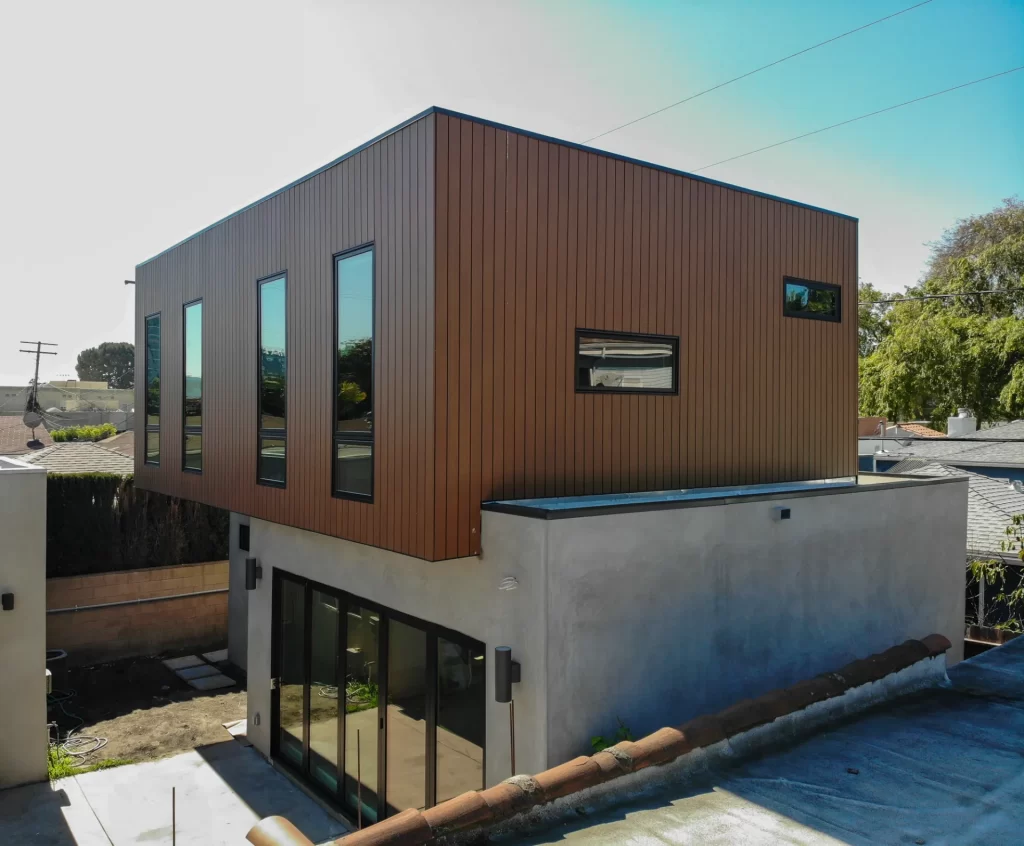
An open-gap profile leaves a visible reveal between boards, which throws a strong shadow line and gives a facade depth and a contemporary, textured look. A closed-gap profile brings the boards tight together for a nearly seamless plane, which suits large uninterrupted walls and soffits where you want calm rather than rhythm. A V-groove profile cuts a defined channel between boards for a crisp, classic board rhythm that reads well on a traditional-modern house. The same panel finish can run in any of the three, so the profile is a design lever you set independently of the color.
Finishes: Wood Tones and Solids
Finish is the second choice. Wood-look tones run from pale ash and white oak through teak and warm walnut to dark wenge, and because the grain is applied rather than grown, the color stays consistent panel to panel with none of the variation of natural lumber. Solid powder-coat colors are available too, for a clean modern facade or to contrast a wood-look field. Either way the finish is a bonded powder coat, so it resists fading and chalking for decades, even on a south wall that takes reflected sun all day. For how the wood-grain finish is made and how convincing it is, see our guide on the wood-grain aluminum finish.
The Click-Rail System: How Panels Install
The reason aluminum cladding panels go up faster than board cladding is the rail. Instead of fastening each board to the wall, installers set a grid of click rails, then clip the panels onto them. The panel locks onto the rail with a concealed connection, which keeps the face clean and makes long, aligned runs straightforward across a tall wall.
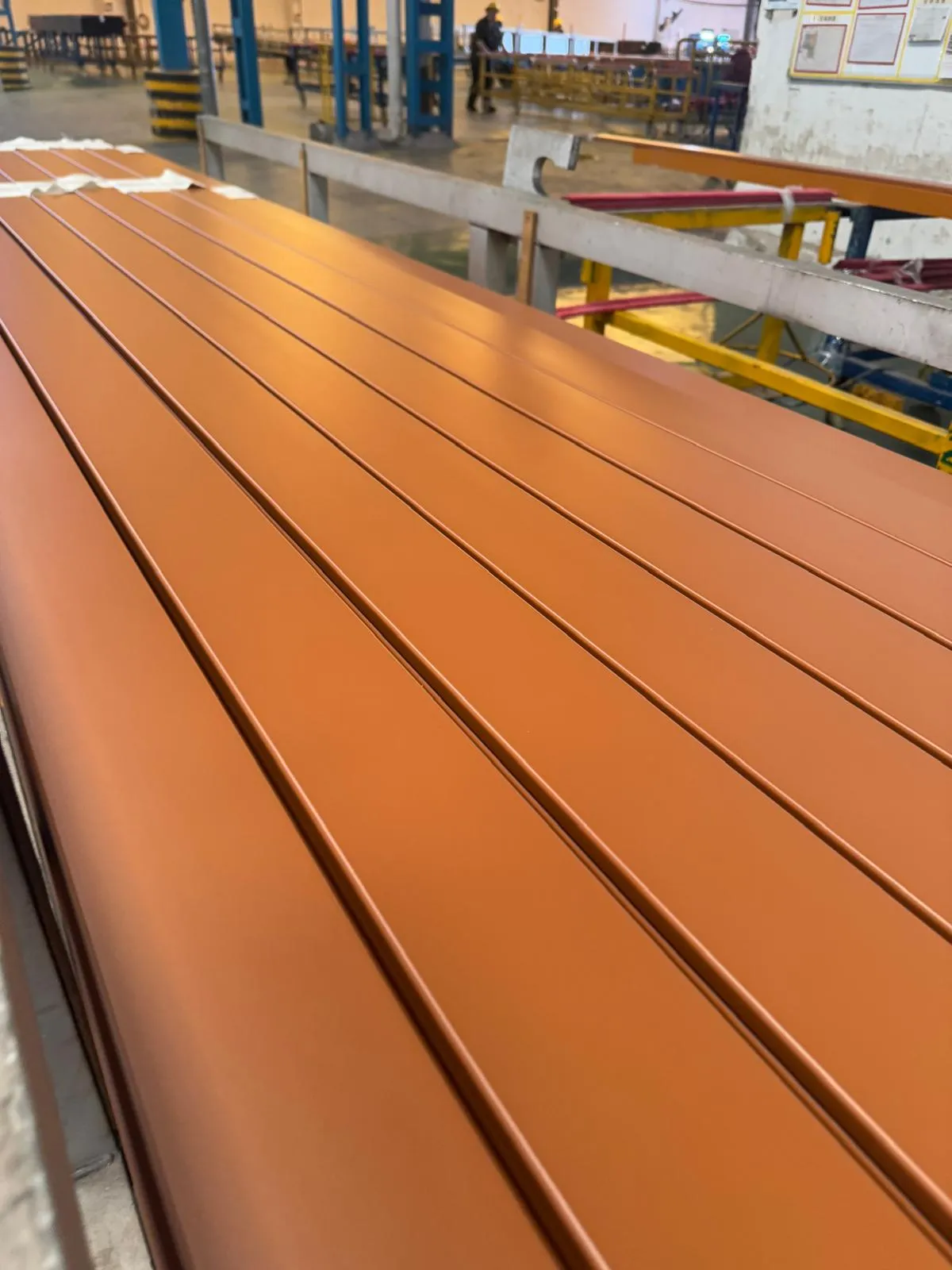
Because the panels hang off rails rather than sitting flat against the sheathing, the assembly behaves as a rail-mounted system, which keeps the detailing crisp and lets a single panel be released later if it is ever damaged, without disturbing the rest of the wall. Rail layout, spacing, and fixings are engineered per wall and reviewed against local code. The full walk-through is in our guide on how to install aluminum cladding.
Where Aluminum Cladding Panels Go
The same panel family covers more than the main wall, which is what lets a building read as one material rather than a wall with accessories.

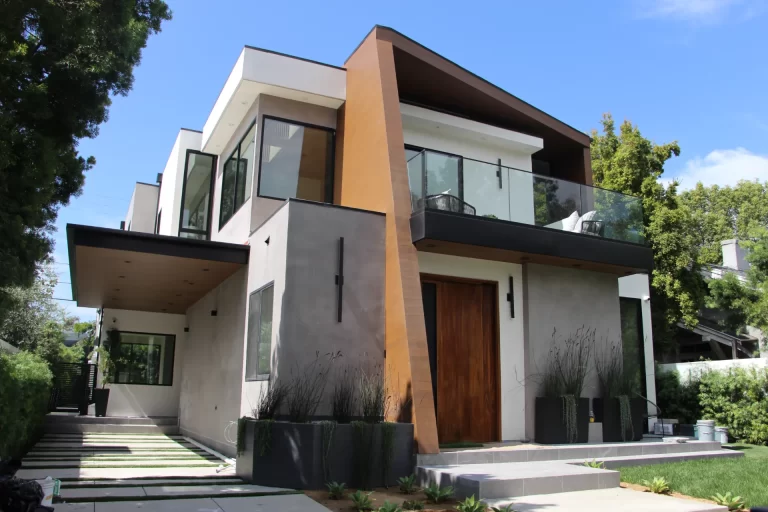
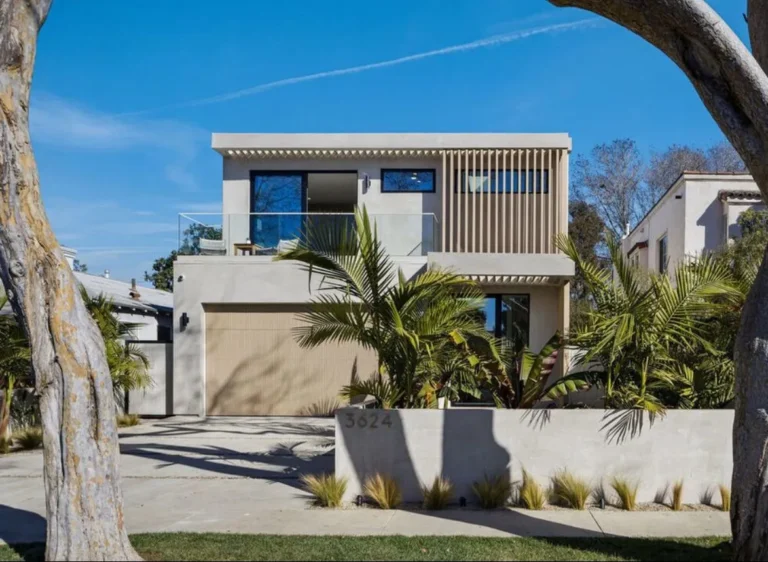
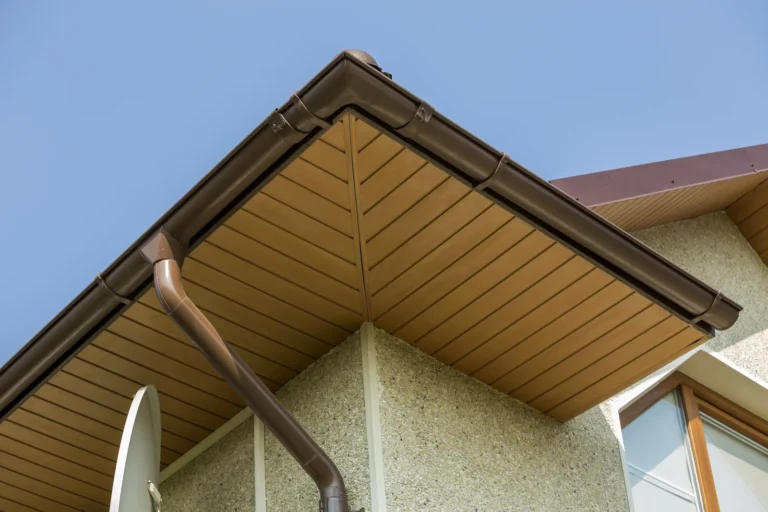
Panels run on exterior walls and full facades, wrap onto the aluminum soffit under the eaves, line covered entries and commercial breezeways, and carry overhead onto aluminum pergolas and trellises. Running one finish across all of those planes is what makes a project look designed. For the wider material picture, our pillar on exterior cladding materials compares the options, and our breakdown of metal cladding versus wood and fiber cement explains why aluminum keeps winning.
Performance: Fire, Weather, and Maintenance
The material does the heavy lifting here. Aluminum is non-combustible, tested to ASTM E136 and rated Class A under ASTM E84, which is why aluminum cladding panels pass where combustible boards are restricted in a California fire zone. They do not absorb water, so they cannot rot, and they are dimensionally stable, so they do not sag or warp on a long sun-baked run. Maintenance is an occasional rinse. For the service-life detail, see how long aluminum cladding lasts.
Choosing Panels for Your Project
Work the three choices in order. Start with the profile, because the shadow line sets the character: open-gap for texture and depth, closed-gap for a calm plane, V-groove for a crisp classic rhythm. Then pick the finish, the wood tone or solid color that fits the building and the neighbors. Last, set the layout, horizontal to stretch a facade or vertical to add height. With those three locked, the rail layout and panel schedule follow, and the performance is already handled by the aluminum.
The Bottom Line
Aluminum cladding panels are a simple system with three real choices: profile, finish, and layout. Get those right and the aluminum takes care of the rest, giving you a wood or solid look on a non-combustible, low-maintenance wall that installs fast on a click-rail system and still looks new decades later. The same panels carry from the facade to the soffit and the shade structures, so the whole building reads as one material.
Specifying aluminum cladding panels for a project? Clicklad manufactures the panels, profiles, rails, and finishes in Gardena, California. Get in touch with our team and we will come back with the right profile, finish, and rail layout for your wall, or browse the full range on our products page.
Frequently Asked Questions
What are aluminum cladding panels?
Aluminum cladding panels are solid extruded aluminum boards with a powder-coat finish, usually in a wood-grain tone, that clip onto a rail system on the wall. They give the look of wood or a solid color on a non-combustible, low-maintenance wall that does not rot, warp, or burn.
What profiles do aluminum cladding panels come in?
The main profiles are open-gap, closed-gap, and V-groove. Open-gap leaves a visible reveal for a strong shadow line and a contemporary, textured look. Closed-gap brings boards tight for a nearly seamless plane. V-groove cuts a defined channel for a crisp, classic board rhythm. The same finish can run in any of the three.
How do aluminum cladding panels install?
They clip onto a click-rail system. Installers set a grid of rails on the wall, then lock the panels onto them with a concealed connection, so there are no face screws or nails. This makes installation faster than nailing up board cladding and lets a single panel be released later if it is ever damaged.
Are aluminum cladding panels fire rated?
Yes. Aluminum is non-combustible, tested to ASTM E136 and rated Class A under ASTM E84, which is why aluminum cladding panels pass where combustible boards are restricted in a California fire zone. The fire performance is built into the aluminum itself, not a surface treatment.
Can aluminum cladding panels be used on soffits and ceilings?
Yes. The same panel family runs on exterior walls, wraps onto the soffit under the eaves, lines covered entries and breezeways, and carries overhead onto pergolas and shade structures. Running one finish across all of those planes is what makes a building read as a single coordinated material.