
Composite cladding earned its popularity honestly. It promised the warmth of a timber wall without the sanding, staining, and rot that come with real wood, and for a lot of projects it delivered exactly that. So if you are weighing composite cladding for an exterior wall, the question is not whether it is a good product. It is whether it is the right wood-look cladding for a wall that has to handle California sun, decades of weather, and, increasingly, a fire code. This guide compares composite cladding with solid aluminum cladding honestly, including where composite genuinely wins.
Both give you the wood look without the wood. The difference is what each one is made of, and that difference decides how the wall behaves ten and twenty years in.
The Quick Answer: Same Look, Different Core
Composite cladding is wood fiber bound in plastic; solid aluminum cladding is metal with a printed wood-grain finish. Composite resists rot and looks convincing, but as a polymer product it expands in heat, can fade, and is combustible. Solid aluminum holds its shape and color for decades and is non-combustible, which is the deciding factor on a fire-zone wall. Composite is the better value on a sheltered, low-risk wall. Solid aluminum is the one that keeps performing where sun and fire are in play.
| What matters on the wall | Composite / WPC cladding | Solid aluminum cladding |
|---|---|---|
| The wood look | Good, can read plastic up close | Photoreal grain finish |
| Fire | Combustible, no real rating | Non-combustible (Class A) |
| Heat movement | Expands, can sag on long spans | Dimensionally stable |
| Color over time | Can fade and drift | Powder-coat holds for decades |
| Weight and install | Heavier boards, hidden clips | Light, fast click-rail system |
| Lifespan | 20 to 30 years | 40 to 50+ years |
The rest of this guide walks what each material is and where each one belongs.
What Composite Cladding Actually Is
Composite cladding, often sold as WPC for wood-plastic composite, is made by mixing wood flour or wood fiber with a plastic binder, usually polyethylene or PVC, and forming it into boards. Better products are co-extruded, which means the structural core is wrapped in a tougher capped outer layer that carries the color and takes the weather. The result is a board that looks like timber, resists the rot and insect damage that plague real wood, and needs far less upkeep than cedar or redwood.
That is a real engineering win, and it is why composite took so much share from natural wood. For a wall that mostly needs to beat rot and cut maintenance, composite does the job.
Where Composite Cladding Does Well
It is worth being fair about this, because composite is not a weak product. It resists moisture and will not rot or feed termites the way wood does. It needs no sanding or staining, just occasional cleaning. The capped versions hold a convincing wood texture, and the color is consistent board to board rather than the lottery of natural lumber. On a shaded, lower-risk wall, a covered walkway, or a project where budget leads the decision, composite cladding is a sensible, good-looking choice.
The honest caveats show up in three places: heat, color, and fire.
Where Composite Struggles: Heat, Color, and Fire
Because composite is plastic-based, it moves. It expands and contracts with temperature more than wood or metal, which is why installers leave larger gaps and why long, sun-exposed runs can sag or wave over time if the spacing and support are not perfect. On a south or west wall in Southern California, that thermal movement is working every single day.
Color is the second point. Capped composites fade slower than early products did, but as a pigmented polymer surface they still drift under constant UV, and a faded composite board is not something you can sand back and refinish the way you can touch up other materials.
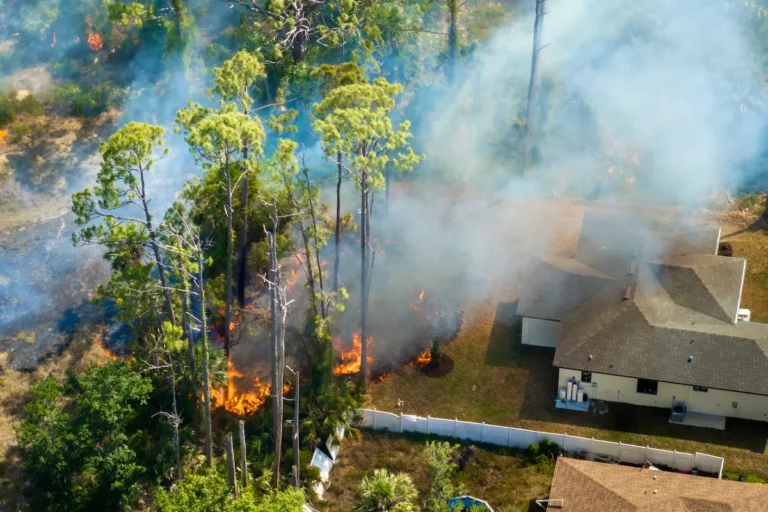
The third point is the one that matters most on a California project. Composite is a polymer product, so it is combustible. It does not carry a meaningful non-combustible rating, which means in a wildfire zone it falls on the same side of the line as wood and vinyl, and it invites the same questions from a plan checker or an insurer.
Solid Aluminum: The Other Wood-Look Option
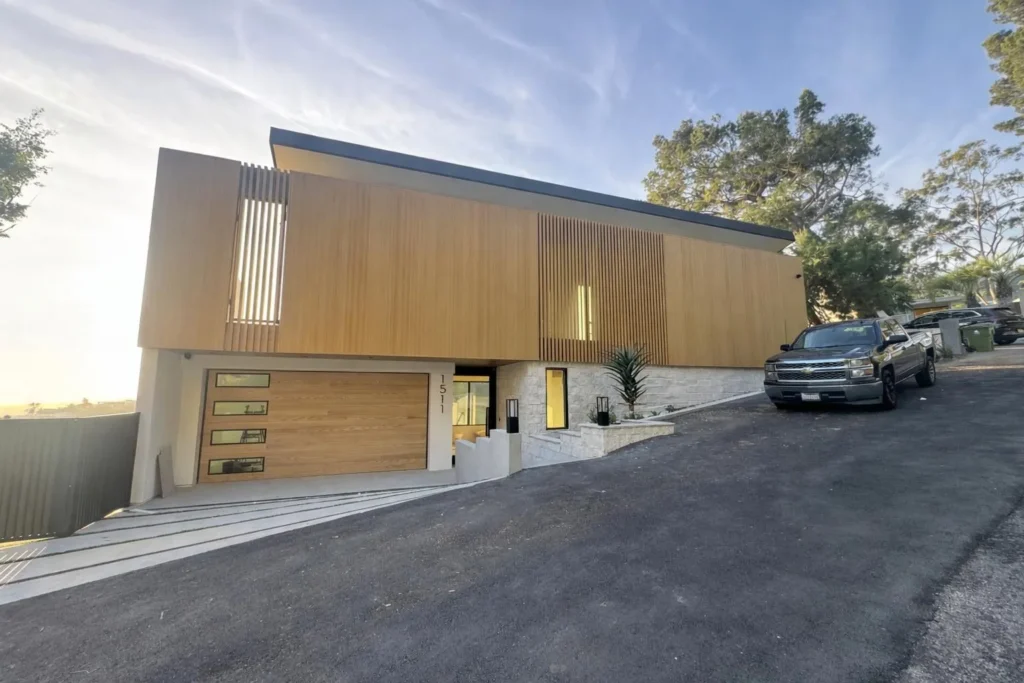
Solid aluminum cladding arrives at the same wood look from a completely different material. Instead of a plastic-and-fiber board, it is an extruded aluminum profile with a photoreal wood grain bonded into a powder-coat finish, so from a normal viewing distance it reads as oak, teak, or walnut rather than metal. There is no polymer core doing the structural work, just solid metal.
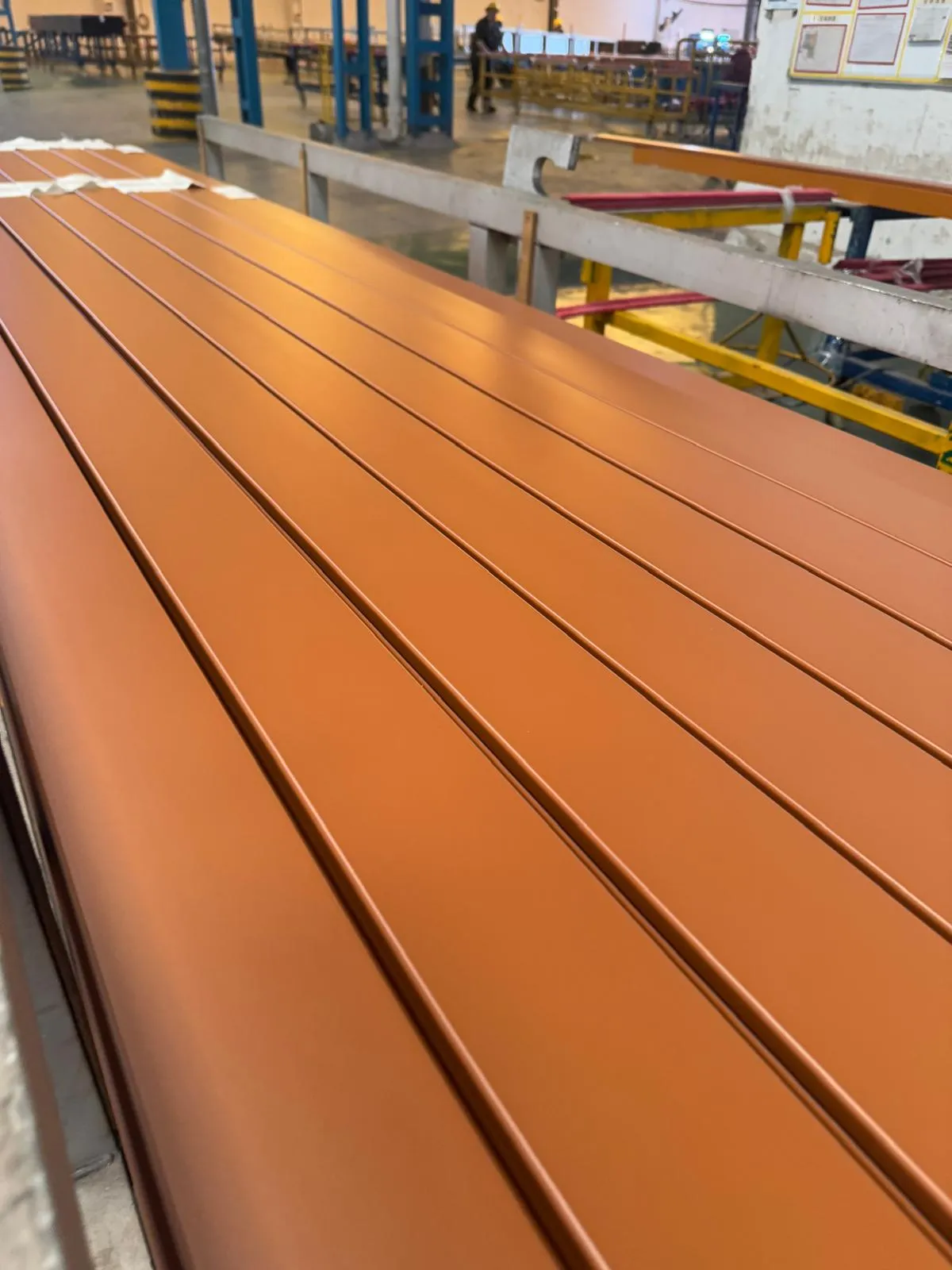
That construction is what gives it the edge on exactly the three points where composite struggles. Aluminum barely moves with heat, so the boards stay straight and flat on a long sun-baked wall. The powder-coat color holds for decades without fading or needing a refinish. And the metal is non-combustible, tested to ASTM E136 and rated Class A under ASTM E84. Clicklad panels are 6063-T5/T6 aluminum with up to 80% recycled content, clipped onto a rail system rather than face-nailed. If you want the look specifically, our guide to wood cladding covers every route to it, and how long aluminum cladding lasts covers the service life.
The Fire Line That Decides Many California Walls
In much of California this comparison is settled before it starts. Wildland-urban interface rules under Chapter 7A push exterior walls toward non-combustible construction, and insurers increasingly surcharge or refuse combustible cladding on fire-zone homes. A polymer-based composite sits on the combustible side of that line; solid aluminum sits firmly on the non-combustible side and carries the listings to prove it. If the building is in a fire zone, that single fact often makes the decision for you. We cover the detail in our guides on whether aluminum siding is fire resistant and on WUI and Chapter 7A cladding in California.
Reading Cost the Right Way
Composite usually looks friendlier on the first invoice, and on a sheltered, low-risk wall that can be the right call. The picture changes when you read cost across the life of the wall instead of at install. Factor in a shorter replacement cycle, the chance of fade you cannot refinish, and, on a fire-zone lot, the insurance premium a combustible wall can carry, and the gap narrows or reverses. The sharper question is not what costs least to hang, it is what costs least per year it stays on the wall and passes inspection.
Matching the Whole Building
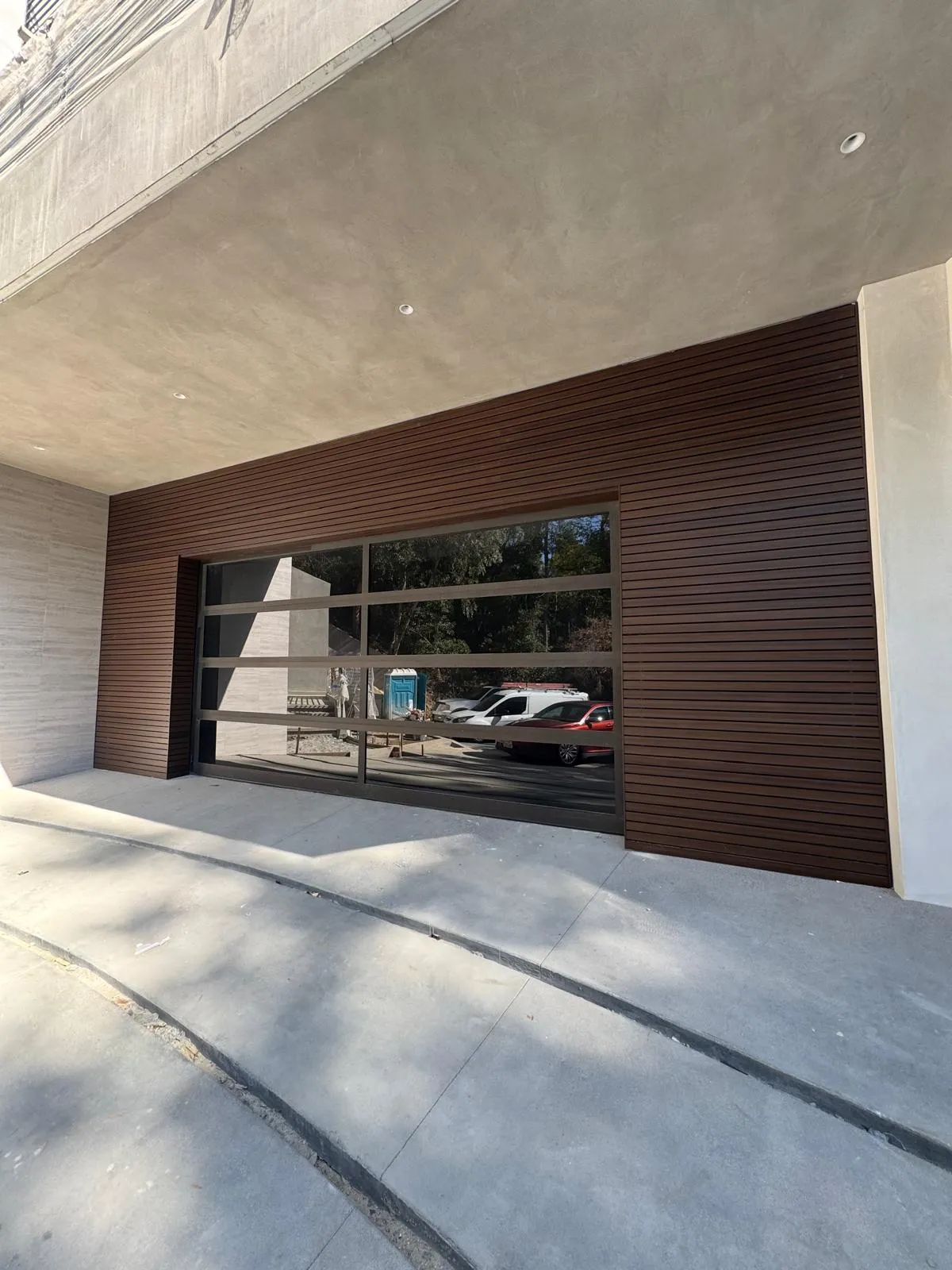
Whichever material you choose, the wall is only one plane. The look reads as intentional when the same finish carries onto the soffit under the eaves and the shade structures over the patio. This is a practical advantage for solid aluminum, because the wall panels, the aluminum soffit, and the aluminum pergolas and trellises all come from one line in one finish, so the tone on the facade is the exact tone overhead.
If you are still choosing the material itself, our pillar on exterior cladding materials compares every option, and our breakdown of metal cladding versus wood and fiber cement explains why aluminum keeps winning the swap.
The Bottom Line
Composite cladding is a genuinely good answer to one problem: getting the wood look without the rot and the restaining. On a sheltered, lower-risk wall it is a sensible choice. But it is still a polymer product, so it moves in heat, it can fade, and it is combustible, and those three traits are exactly the ones that matter most on a sun-exposed, fire-zone California wall. Solid aluminum keeps the same wood look and answers all three: stable, colorfast, and non-combustible, on a wall that still looks new decades later.
Comparing composite and aluminum for your own wall? Clicklad manufactures solid aluminum cladding, soffit, and shade systems in Gardena, California, in a full range of wood tones. Get in touch with our team and we will come back with the right finish and system for your project, or browse the range on our products page.
Frequently Asked Questions
What is composite cladding?
Composite cladding, often called WPC for wood-plastic composite, is made by binding wood fiber with a plastic polymer and forming it into boards. Better versions are co-extruded with a tougher capped outer layer. It gives a wood look, resists rot and insects, and needs much less upkeep than real timber.
Is composite cladding better than aluminum cladding?
It depends on the wall. Composite can be the better value on a sheltered, lower-risk wall. Solid aluminum wins where it counts most on an exposed or fire-zone wall: it is non-combustible, it does not move or sag in heat, and its powder-coat color holds for decades, where composite is combustible, expands with heat, and can fade.
Does composite cladding fade?
Capped composites fade more slowly than early products, but as a pigmented polymer surface they still drift under constant UV, and a faded composite board cannot be sanded back and refinished. A powder-coat finish on aluminum holds its color far longer because the color is bonded into the coating rather than sitting on a plastic surface.
Is composite cladding allowed in a fire zone?
Composite is a polymer-based product, so it is combustible and does not carry a meaningful non-combustible rating. In California wildland-urban interface areas under Chapter 7A, that places it alongside wood and vinyl, where it is often restricted or surcharged by insurers. Non-combustible solid aluminum avoids that problem.
Is composite cladding cheaper than aluminum cladding?
Composite usually looks friendlier on the first invoice. Read across the life of the wall, though, and a shorter replacement cycle, fade you cannot refinish, and the insurance cost of a combustible wall in a fire zone narrow or reverse that gap. The useful comparison is cost per year of service, not cost at install.