
Stand in front of any new building in Los Angeles right now and the wall tells you when it was designed. The stucco boxes went up before the fires. The rebuilds framed after the January 2025 Palisades and Eaton fires, which destroyed more than 16,000 structures between them, are going back up in fiber cement, stone, and metal. The material on the outside of a building stopped being a finish decision and became a performance decision, and that shift is exactly why choosing among exterior cladding materials is harder than it used to be. Wood looks warm but burns. Vinyl costs little but melts. Brick lasts forever but weighs a fortune to hang. Every option trades something.
This guide lays out the real exterior cladding materials, what each one is good and bad at, how the costs actually stack up over a building’s life rather than on day one, and a simple way to narrow the field for your own project.
The Quick Answer: Which Exterior Cladding Wins
No single material wins every project, but for buildings that have to balance fire safety, lifespan, low upkeep, and looks, metal cladding (aluminum in particular) sits at the front of the field. Wood and vinyl win on upfront price. Brick and stone win on sheer permanence and mass. Fiber cement is the safe middle. Aluminum wins on the combination that most 2026 projects actually need: non-combustible, light, low-maintenance, recyclable, and available in finishes that read as wood without the fire risk.
| Material | Fire performance | Real-world lifespan | Maintenance | Relative upfront cost |
|---|---|---|---|---|
| Wood / timber | Combustible | 20 to 40 years | High | Medium to high |
| Vinyl | Combustible, melts near 160°F | 20 to 30 years | Low | Lowest |
| Fiber cement | Non-combustible core | 30 to 50 years | Medium | Medium |
| Brick / stone | Non-combustible | 75+ years | Very low | Highest |
| Composite (WPC) | Combustible | 25 to 40 years | Low | Medium to high |
| Metal / aluminum | Non-combustible (Class A) | 40 to 50+ years | Low | Medium to high |
The rest of this article is the reasoning behind that table.
What “Exterior Cladding” Actually Means
Cladding is the outer skin of a building. It’s the layer fixed to the structural frame or sheathing that sheds water, handles wind, takes the sun, and gives the building its face. In North America people often say “siding” for the residential version and “cladding” or “facade” for the commercial version, but they describe the same job. If you want the full distinction, most of it comes down to scale and how the material attaches.
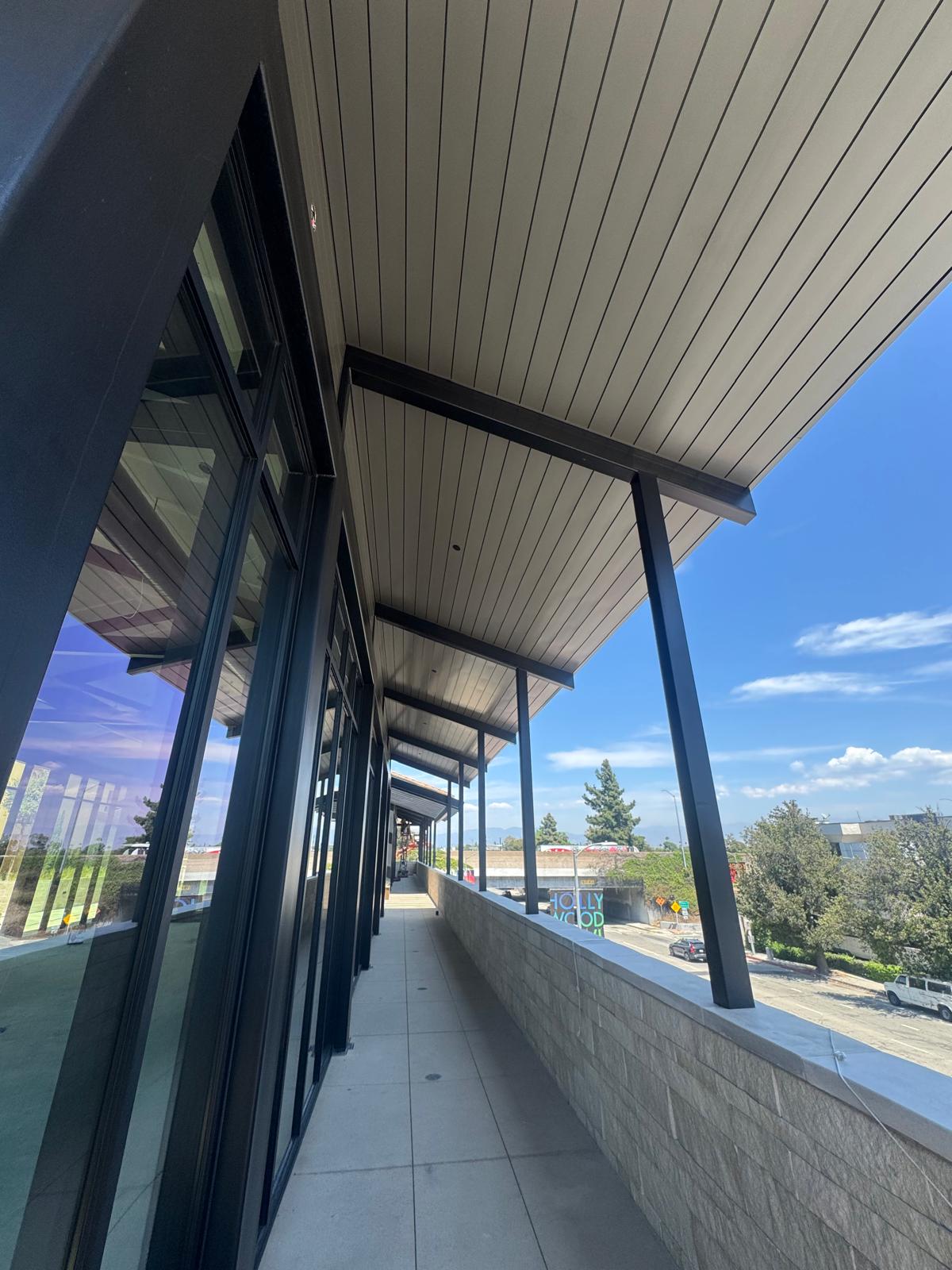
Modern exterior cladding is usually part of a system, not a single product. A rainscreen assembly, for example, hangs the cladding panels off rails with a ventilated air gap behind them, so water that gets past the face can drain and dry instead of soaking the wall. That system thinking matters, because the same aluminum panel performs very differently bolted flat to a wall than it does on a drained, back-ventilated rail. When you compare exterior cladding materials, compare the assemblies they belong to, not just the raw boards. That system logic carries all the way to the parts people forget: the underside of the roof, where aluminum soffit panels close off and ventilate the eaves in the same wood-look finish as the wall.
The Main Exterior Cladding Materials, Compared
Here is where each material earns or loses its place.
Wood and timber cladding
Wood is the material everyone loves and few people fully budget for. Cedar, redwood, and thermally modified pine give a warmth no synthetic finish quite matches, and a well-detailed timber wall ages beautifully. The catch is upkeep and fire. Wood needs re-oiling or re-staining every few years, it moves with humidity, and in a wildfire zone it’s a liability that many California insurers now price against or refuse outright. For a wildland-urban interface lot, raw timber is often a non-starter under local code.
Vinyl siding
Vinyl is the budget champion and nothing else. It’s cheap to buy, cheap to hang, and comes in every color. But it’s a petroleum product that fades, gets brittle in cold, warps in heat, and deforms at around 160°F. It carries no meaningful fire rating and isn’t approved for most California fire zones. For a short-hold rental in a low-risk region it can still pencil out. For anything you plan to own for 20 years, the replacement cycle eats the savings.
Fiber cement
Fiber cement, the category James Hardie made famous, is the reasonable-person choice. It’s a cement, sand, and cellulose composite that won’t burn, resists rot and insects, and holds paint well. It’s heavier than wood or metal, which makes it slower and more labor-intensive to install, and cut edges need sealing and periodic repainting. It’s a genuinely strong material. It just carries more weight and more finish maintenance than metal for a comparable service life.
Brick and stone
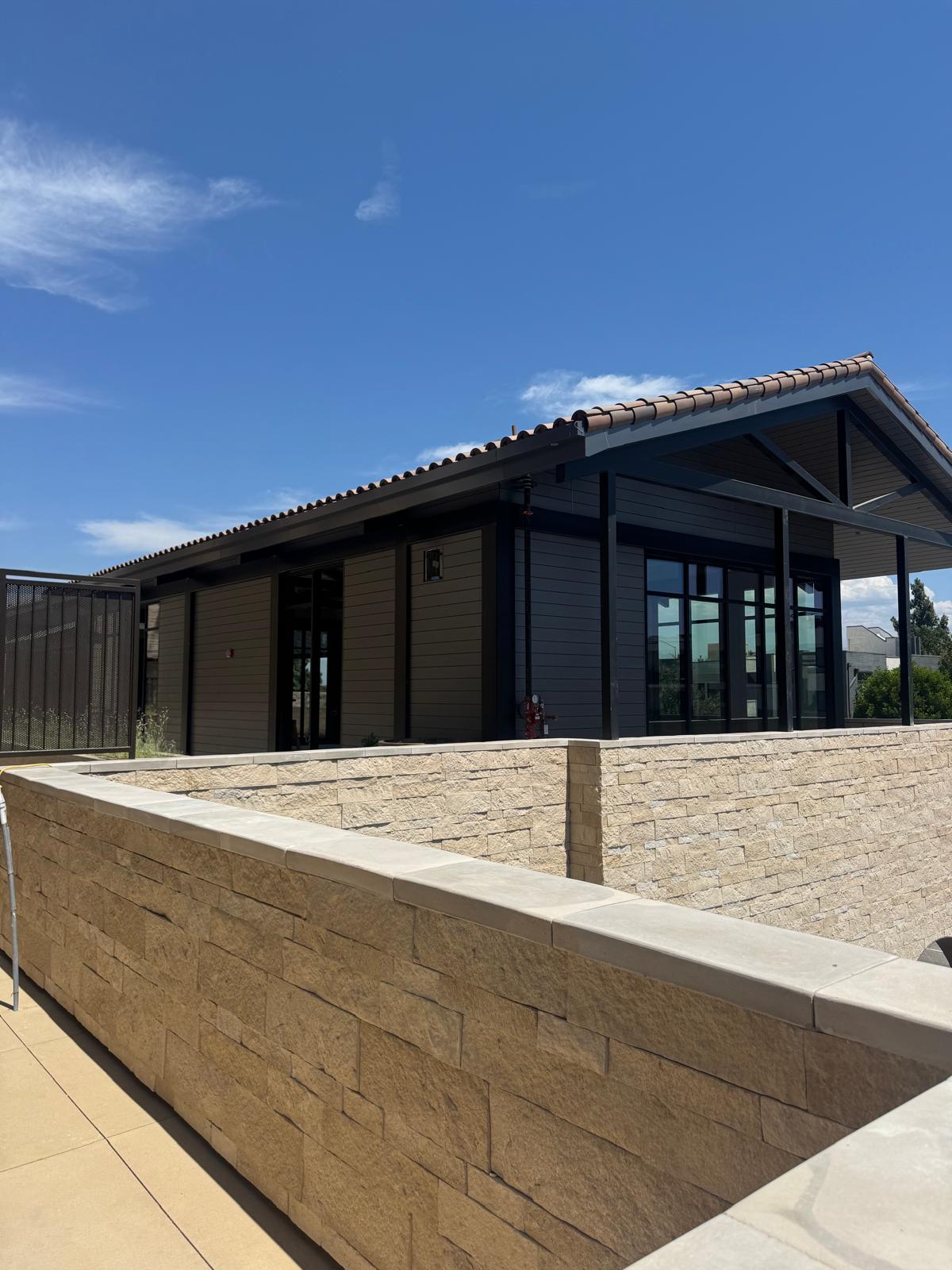
Brick and natural stone are the permanence play. Properly built, a masonry or stone-veneer wall outlasts everything else on this list and asks almost nothing of its owner. The trade-offs are cost and weight: the material is expensive, the labor is skilled and slow, and the structure has to be designed to carry the load. On a renovation or a lightweight frame, that mass is often the deal-breaker.
Composite (wood-plastic) cladding
Composite or wood-plastic-composite boards promise the wood look without the wood upkeep. They resist rot and hold color longer than timber. But they’re still a plastic-and-fiber product: they expand and contract with heat, they can sag on long spans, and being polymer-based, they’re combustible, which limits them in fire zones the same way vinyl and wood are limited.
Metal and aluminum cladding
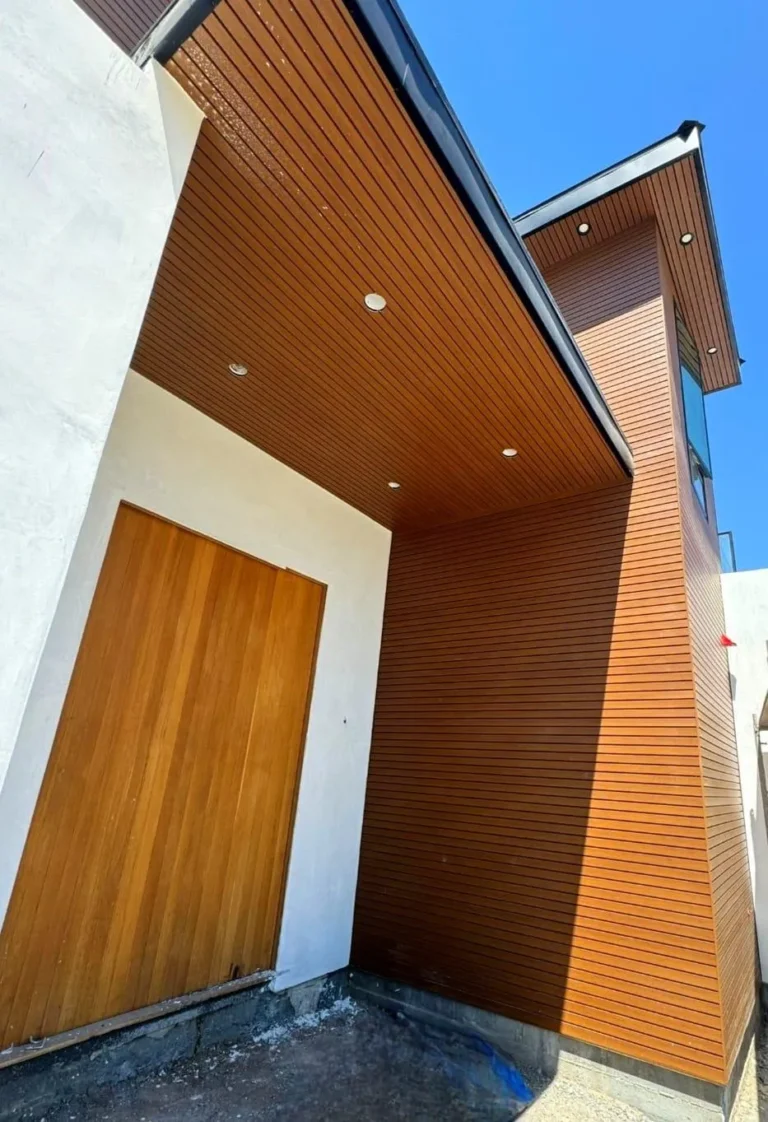
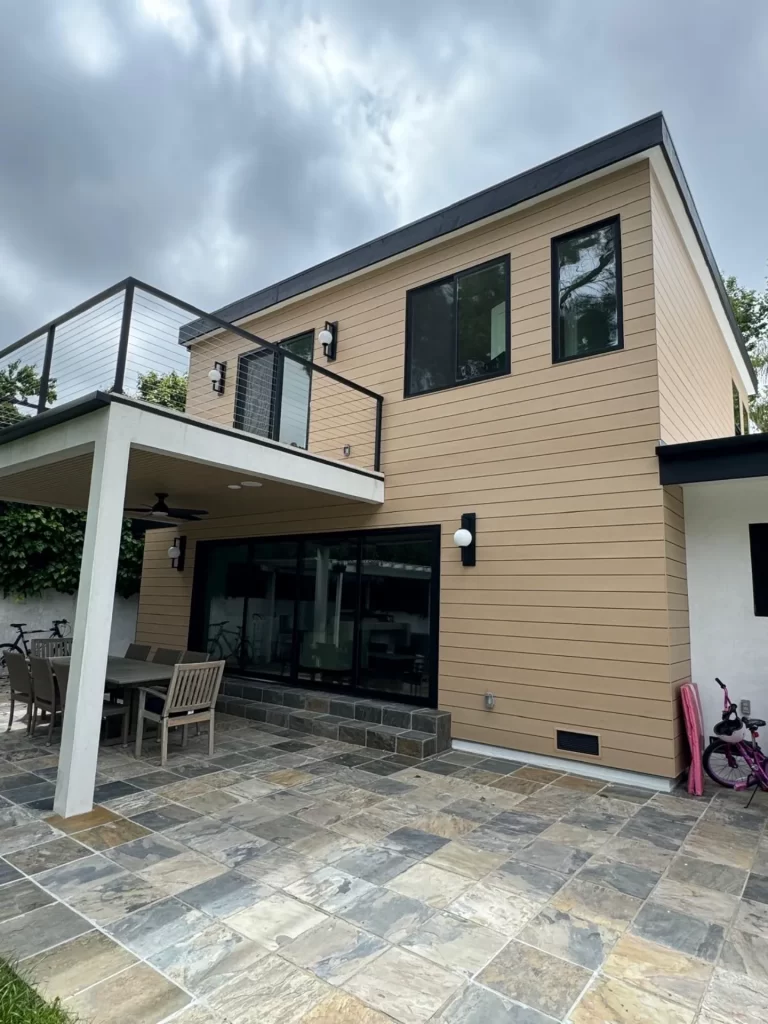
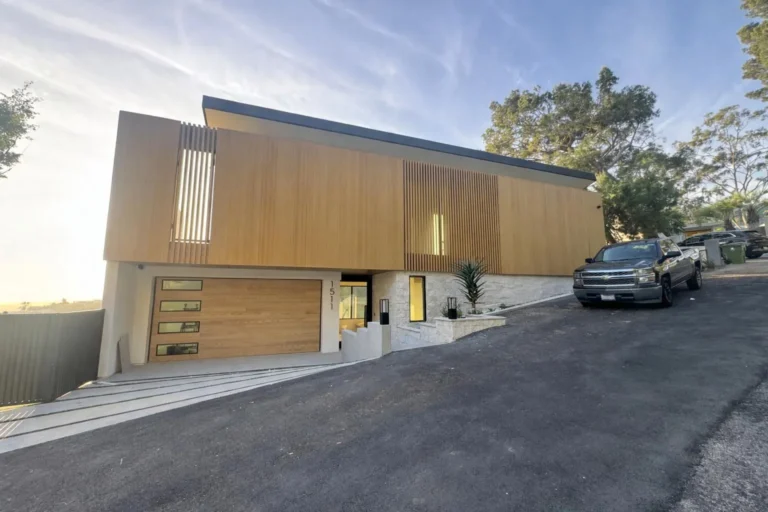
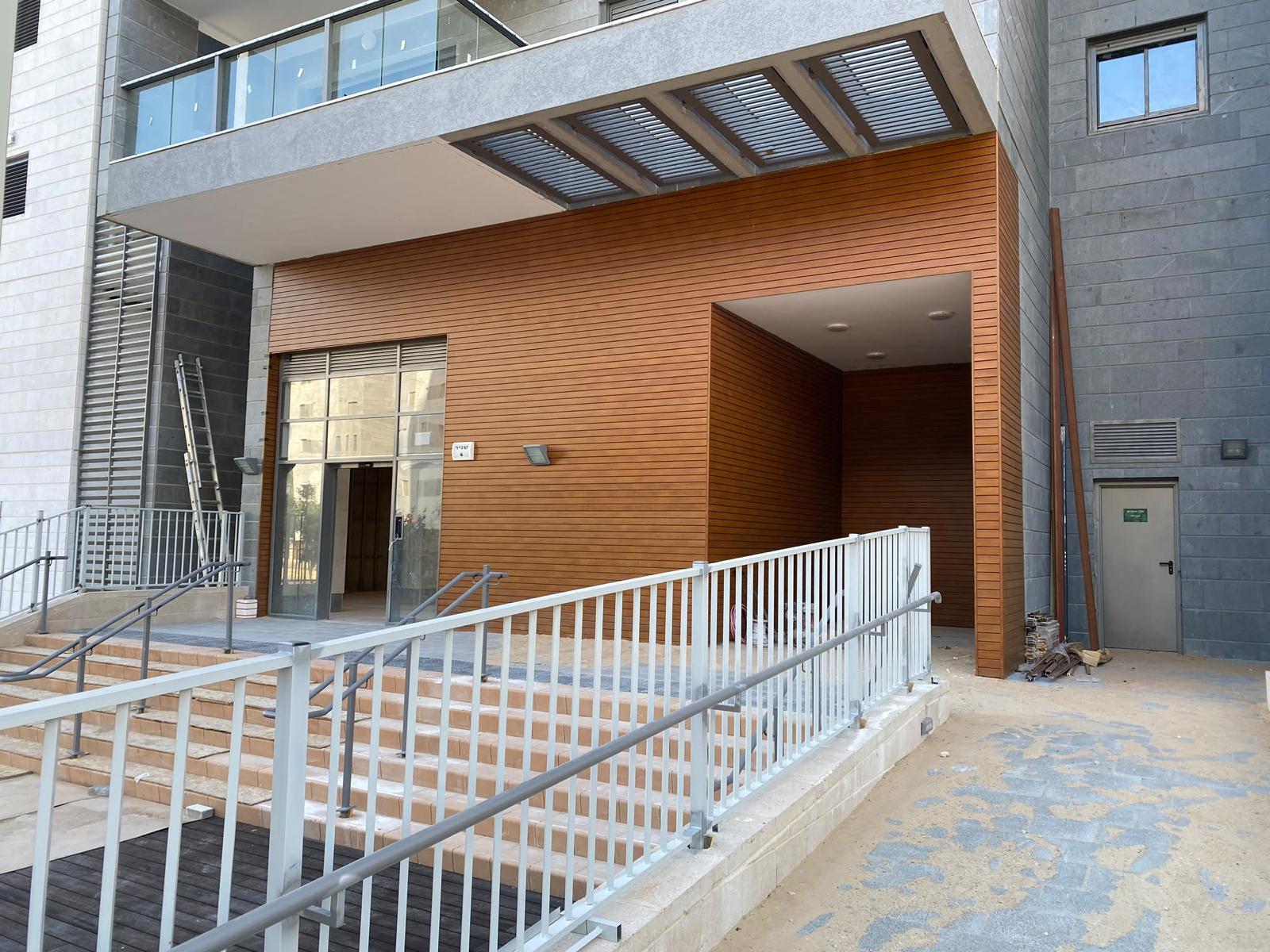
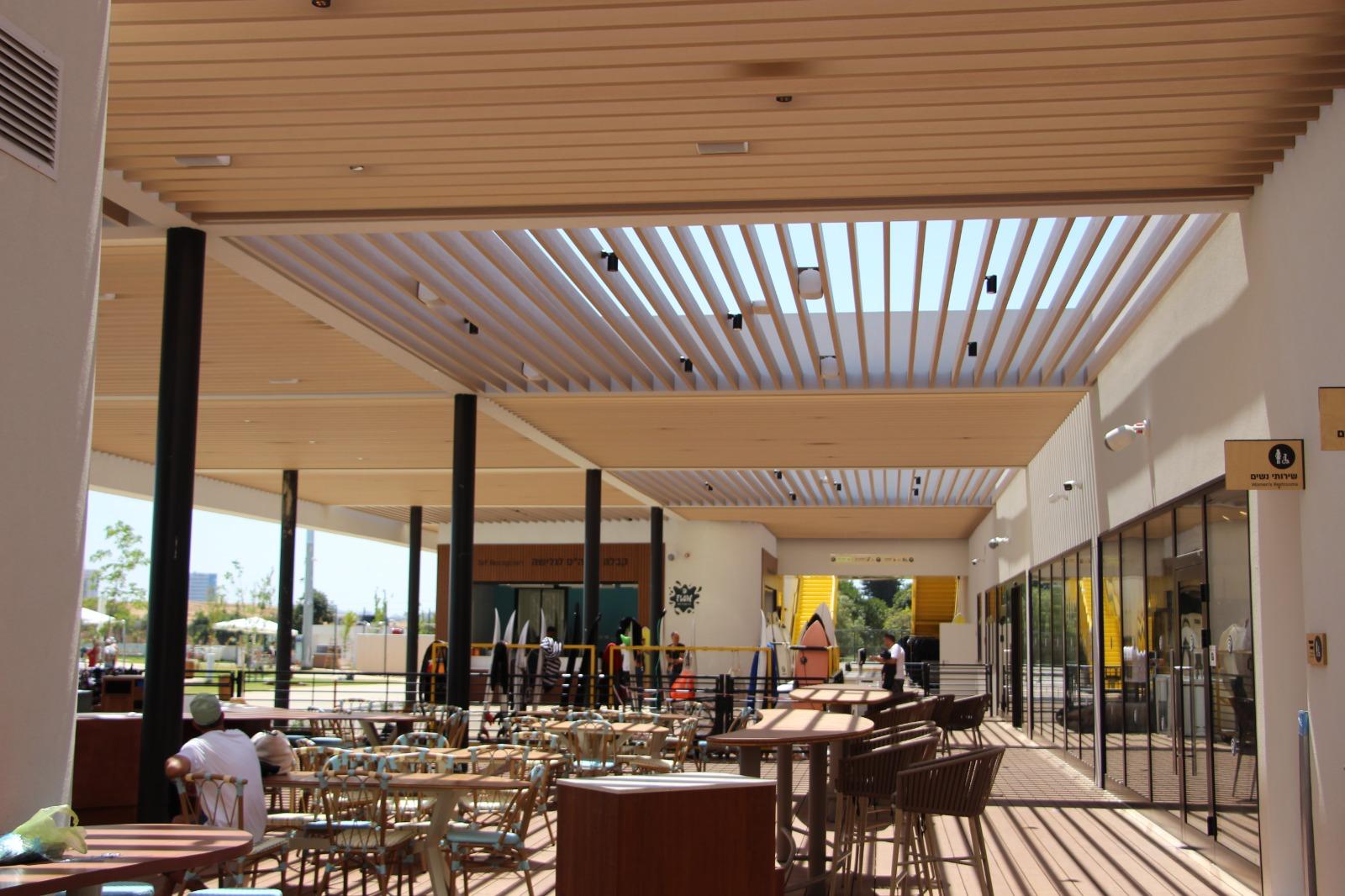
Metal cladding covers steel, zinc, copper, and aluminum. Aluminum is the one that fits the widest range of projects. It’s non-combustible, it doesn’t rust the way steel can, it weighs a fraction of masonry or fiber cement, and a factory powder-coat finish resists fading for decades. Because aluminum is light, the panels can hang on a fast rail system rather than being nailed board by board, which cuts labor. And modern wood-grain print finishes give designers the cedar look on a wall that carries a Class A fire rating. That combination, the warmth of wood with the safety of metal, is why aluminum keeps showing up on the rebuilds.
Clicklad’s panels are a good example of where the category has gone: 6063-T5/T6 aluminum in 1.4mm panels on 2.5mm click rails, powder-coated, with wood-grain finishes and up to 80% recycled aluminum content. The click system means the panels snap onto the rails with no face screws or nails, so the wall goes up faster and reads clean.
Fire Performance: The Divider That Now Decides Many Projects
For a growing share of projects, fire performance isn’t one factor among many. It’s the gate. California’s Chapter 7A rules for wildland-urban interface construction, and the insurance market that now enforces its own version of them, split exterior cladding materials into two groups: the ones that burn and the ones that don’t.
Non-combustible materials, which are tested to standards like ASTM E136 and rated for surface burning under ASTM E84, include brick, stone, fiber cement, and metal. Combustible materials, which include wood, vinyl, and polymer composites, either fail those tests or need heavy treatment and detailing to pass in a fire zone. A Class A rating under ASTM E84 is the top surface-burning classification, and it’s increasingly the floor for what a fire-zone project or a cautious insurer will accept.
Aluminum sits firmly on the non-combustible side. Clicklad’s aluminum siding is listed under ICC-ES report ESR-5054 as meeting ASTM E136 (non-combustible) and ASTM E84 Class A, and it carries a CAL FIRE Office of the State Fire Marshal Building Materials Listing for wildland-urban interface exterior siding. Those listings are the paperwork an architect or a homeowner needs to show a plan checker or an insurer, and they’re the reason metal keeps beating wood and composite on fire-zone specs. For a deeper look, see whether aluminum siding is fire resistant.
Specifying for a California project or rebuilding in a fire zone? The ICC-ES ESR-5054 report and the full system documentation live in the Clicklad resources library. For a project-specific read on the right wall assembly, get in touch with our team and we’ll walk through the spec for your elevation.
Cost and Lifetime Value: Reading Past the Upfront Number
Upfront price is the number everyone compares, and it’s the most misleading one. Ranked cheapest to most expensive to buy and install, exterior cladding materials run roughly: vinyl at the bottom, then wood and fiber cement in the middle, composite and metal a step up, and brick and stone at the top.
Now run the same list over 40 years of ownership and the order scrambles. Vinyl gets replaced once or twice inside that window. Wood needs refinishing on a cycle that adds up to more than the original install. Fiber cement needs repainting. Brick and metal mostly just sit there. When you divide total cost of ownership by years of service, the cheap-to-buy materials stop looking cheap, and the durable, low-maintenance ones (masonry and aluminum) close most of the gap or win outright. The right question isn’t “what costs least to hang,” it’s “what costs least per year it stays on the wall.”
Maintenance and Longevity by Material
Maintenance is where day-two reality diverges from the showroom.
- Wood: re-stain or re-oil every 2 to 5 years, watch for rot at end grain and ground contact.
- Vinyl: an occasional wash, but plan for full replacement at 20 to 30 years and for cracking in cold or warping near heat.
- Fiber cement: wash and repaint on a roughly 10 to 15 year cycle, reseal cut edges.
- Brick and stone: re-point mortar joints over decades, otherwise close to zero.
- Composite: wash periodically, inspect for sag and thermal movement at fasteners.
- Aluminum: an annual rinse with mild detergent, a periodic check of sealants and flashings, and the finish carries a long factory warranty. For the full schedule, see our guide to aluminum cladding maintenance.
On lifespan, the durable materials cluster at the top. Brick and stone run past 75 years. Aluminum runs 40 to 50 years and often longer, which our article on how long aluminum cladding lasts unpacks against real service data. The gap between a 25-year material and a 50-year one is one full re-clad you never have to pay for.
How to Choose the Right Exterior Cladding
Skip the paralysis. Answer four questions in order and the field narrows fast.
- Is the building in a fire zone or hard-to-insure area? If yes, drop the combustible materials (wood, vinyl, composite) and choose among fiber cement, masonry, and metal. This one question eliminates half the list for many California projects.
- How long will you own it, and what’s the maintenance appetite? Long hold plus low appetite for upkeep points to masonry or aluminum. Short hold on a budget can still justify vinyl or wood.
- What’s the structure able to carry? A lightweight frame or a renovation often rules out the mass of brick and stone, which pushes you toward metal or fiber cement.
- What look do you want, and how fast do you need it up? If you want the warmth of wood with none of the fire risk, wood-grain aluminum on a click-rail system delivers the look and the speed. For a comparison specifically against wood and vinyl, see aluminum siding pros and cons.
By the time you’ve answered those four, most projects are down to one or two materials, and the choice is about detailing and finish rather than a blank field of options.
The Bottom Line
There’s no universal best among exterior cladding materials, but there is a best fit for each project’s mix of fire risk, budget horizon, structure, and look. Vinyl and wood win on day-one price. Brick and stone win on permanence. Fiber cement is the dependable middle. And aluminum wins the combination most 2026 buildings actually need: non-combustible, light, low-maintenance, recyclable, and finished to look like the wood it safely replaces.
Have a real project on the board? Clicklad works directly with architects, builders, and homeowners on aluminum cladding specs for fire-zone, commercial, and residential jobs, from finish selection to the rail system for your wall section. Talk to our team and we’ll come back with the right system, finish, and timeline for your site.
Frequently Asked Questions
What is the most durable exterior cladding material?
Brick and natural stone are the most durable, routinely lasting more than 75 years with almost no maintenance. Among lightweight materials, aluminum leads, with a 40 to 50 year service life, a non-combustible rating, and a factory finish that resists fading for decades.
What is the cheapest exterior cladding?
Vinyl is the cheapest to buy and install. It carries the highest long-term cost, though, because it fades, cracks, and usually needs full replacement within 20 to 30 years, and it isn't approved for most California fire zones.
What is the best exterior cladding for a fire zone?
Non-combustible materials only: fiber cement, brick, stone, or metal. Aluminum is a common choice because it's non-combustible, light, and available with Class A fire listings such as ICC-ES ESR-5054 and a CAL FIRE wildland-urban interface listing.
Is metal cladding better than fiber cement?
Both are non-combustible and long-lasting. Metal (aluminum) is lighter, installs faster on a rail system, needs no repainting, and offers wood-grain finishes. Fiber cement is heavier, needs periodic repainting, and costs less upfront. The right pick depends on weight, labor, and maintenance priorities.
What is the difference between cladding and siding?
They describe the same thing: the outer weather skin of a building. Siding is the common residential term in North America, while cladding and facade are used more for commercial and architectural walls. The material and the job are identical.