
The pitch for aluminum cladding usually ends at “low maintenance,” which is true compared to wood, vinyl, or stucco. It’s not the same as “no maintenance.” A factory powder-coat finish on 6063-T5/T6 aluminum will outlast the building’s first roof, but only if the wall gets a wash now and then, the flashings stay clear, and someone catches a scratched panel before it turns into a coating failure. This guide gives homeowners, facility managers, and architects a clear schedule for aluminum cladding maintenance so the finish hits its warranty life instead of fading at year fifteen. For the long view on panel service life, see how long aluminum cladding lasts.
The Quick Answer
Aluminum cladding maintenance is a once-a-year wash with mild detergent and water, a five-year inspection of sealants and flashings, and a ten-year review of finish wear at high-exposure walls. Routine cleaning takes a soft brush or microfiber cloth, never abrasive pads or alkaline cleaners. Powder-coated aluminum carries a 20 to 30 year finish warranty when maintained per AAMA 2605 guidance, and most failures trace back to harsh chemistry or pressure-washing damage rather than the metal itself.
The rest of the article fills in the cadence, the cleaning steps, the stains worth worrying about, and the inspection points that prevent expensive surprises.
The Maintenance Schedule at a Glance
A realistic schedule has three layers: annual care anyone can handle, a five-year sealant and flashing check that often needs a contractor, and a ten-year finish review for owners pushing toward 40-plus years of service. Frequency shifts with climate.
| Climate / exposure | Routine wash | Sealant + flashing check | Finish + fastener review |
|---|---|---|---|
| Inland, low pollution | Every 12 to 18 months | Every 5 years | Every 10 years |
| Coastal salt air (within 1 mile) | Every 6 months | Every 3 to 5 years | Every 7 to 10 years |
| Urban / industrial | Every 6 to 12 months | Every 5 years | Every 10 years |
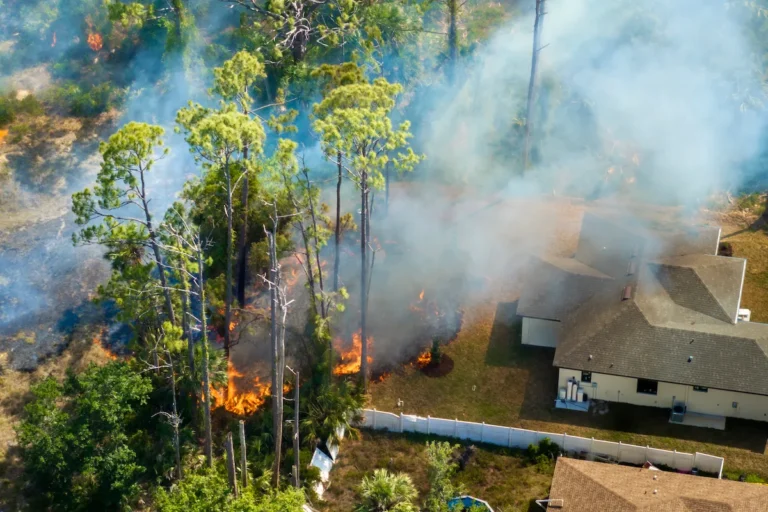
| Wildfire-prone (post-fire smoke) | After each fire event | Every 3 years | Every 7 years |
| High-rainfall, humid | Every 12 months | Every 5 years | Every 10 years |
The bigger driver isn’t the climate label; it’s whether the wall gets rain rinse. North walls and protected entries under deep eaves accumulate film because nothing washes them off. Plan the schedule wall by wall, not house by house.

Routine Cleaning: What Works, What Wrecks the Finish
Annual cleaning is genuinely simple. The mistake homeowners make is treating it like concrete and reaching for something stronger than needed. Powder-coat and PVDF finishes are durable, but their topcoat chemistry doesn’t tolerate aggressive alkalines, solvents, or abrasive grit. The Powder Coating Institute and the Aluminum Association both recommend the same baseline: a 1 to 5 percent solution of mild dish detergent in warm water, applied with a soft sponge or microfiber cloth, rinsed top to bottom with a garden hose.
Safe: soft cotton cloth, microfiber, or natural-bristle brush; mild dish detergent or automotive car-wash soap; pH-neutral cleaners; warm water and a garden hose; a 1:10 household bleach solution for mildew on shaded walls (rinsed within two minutes).
Off-limits: abrasive scrub pads, steel wool, or scouring powders; high-alkaline cleaners (oven cleaner, drain cleaner, anything above pH 10); strong solvents (lacquer thinner, MEK, acetone, gasoline); pressure washers above 1,500 psi or held closer than 18 inches; wire brushes of any kind.
Work top to bottom, soap then rinse, section by section. Letting detergent dry leaves a film. On hot days, wait for the wall to move into shade.
A note on oxidation and chalking
Older aluminum siding from the 1970s and 80s built a reputation for chalking, the powdery white film that develops as paint binder breaks down under UV. Modern powder-coat and PVDF finishes are dramatically more UV-stable, but no organic coating is immune over 20-plus years of California sun. Light chalking on a 15-year-old finish washes off with the detergent routine. If a damp white cloth picks up heavy chalk after a basic wash, the finish is at the end of its color-retention curve. That’s a re-coat conversation, not a panel-replacement one. On a powder-coated Clicklad panel you should never see substrate oxidation unless the coating has been breached; touch-up paint matched to the panel color seals the breach and stops the spread.
Stain Removal: Rust Drip, Hard Water, Organic Growth
Stains on aluminum cladding rarely come from the cladding itself. They come from nearby materials washing onto the panel.
- Rust drip. Aluminum doesn’t rust, but rust from corroded steel above will streak down the face. Replace the failing fasteners with stainless first, then clean with a phosphoric-acid rust remover diluted per the label. Test first; rinse within the contact time.
- Hard water from sprinkler overspray. Calcium deposits build where irrigation hits the wall. Re-aim the sprinkler. Clean with a 1:3 white vinegar and water solution, wiped on, rinsed promptly.
- Organic growth (algae, mildew, lichen). Common on north-facing walls in humid climates. A 1:10 household bleach solution wipes it off; rinse within two minutes. Trim back foliage to restore airflow.
- Tree sap, sticker residue, tar. Isopropyl alcohol or a citrus-based degreaser on a cloth, wiped off promptly. Never solvent thinners.
- Spray paint or graffiti. Use a remover that calls out powder-coat metal as compatible on the label. For repeated targets, a sacrificial anti-graffiti clear coat over the factory finish is worth budgeting.
Specifying or maintaining aluminum cladding on a California project? The Clicklad team works with architects, facility managers, and homeowners on finish selection, climate-appropriate detailing, and post-fire cladding decisions. Get in touch with our team for a project-specific recommendation on the right spec for your wall section.
The Annual Inspection Checklist
Walk the building once a year, ideally before the wet season. Find the small problem before it becomes a wall problem.
- Panel surface. Look across each elevation at a low angle to catch dents, scratches, or coating breaches. Mark anything that exposes bare aluminum.
- Fasteners and trim. On click systems like Clicklad’s, panels are face-fastener-free, but rail screws, end caps, corner trim, and reveal strips have hardware. Confirm it’s stainless and not corroded.
- Sealants at penetrations. Window heads, door frames, hose bibs, dryer vents: any sealant bead, check for cracking or lifting. Re-caulk with exterior-rated silicone or polyurethane.
- Flashings and weep paths. Head flashings, kickout flashings at roof-to-wall transitions, and weep openings at the base of rainscreen cavities need to be clear.
- Ground clearance and vegetation. Cladding should sit at least 6 inches above grade and 2 inches above paving. Trim back shrubs at least 12 inches from the wall.
- Gutters and downspouts. Overflowing gutters dump on the cladding. Clear and re-aim discharge away from the base.
Most items cost nothing to fix on the spot. The expense comes from skipping the walk for five years and finding a flashing failure has rotted the sheathing behind a panel.
DIY vs. when to call a pro
For a single-family home with cladding on the first story, almost everything in this guide is homeowner-scope. A garden hose, a soft brush, mild detergent, an extension pole, and a half-Saturday cover the annual wash. Bring in a professional when the job involves:
- Anything above the first story without safe ground access. Two-story walls and commercial facades belong to a contractor with proper fall protection.
- Sealant replacement at multiple penetrations. Bad sealant work is worse than none; it traps water.
- Coating touch-up beyond a small scratch. Color matching and prep on powder-coat need someone who’s done it before.
- Suspected flashing or substrate failure. Stains bleeding from under panel edges or interior moisture symptoms call for an envelope inspector.
- Post-fire smoke remediation. Heavy soot often needs commercial chemistry. Wrong product, permanent etching on the finish.
Finish Warranties: AAMA 2603, 2604, and 2605 in Plain English
The American Architectural Manufacturers Association publishes the three specifications that govern aluminum coating performance. The difference between a 5-year finish and a 30-year finish is one digit in the spec number.
| Spec | Typical chemistry | Color/gloss retention | Best fit |
|---|---|---|---|
| AAMA 2603 | Standard polyester | About 1 year exterior | Interior, low-exposure, budget commercial |
| AAMA 2604 | Mid-performance polyester | About 5 years, 30% gloss retention | Residential and mid-rise |
| AAMA 2605 | High-performance PVDF (Kynar 500) | 10 years color/gloss/chalk, 30-year field history | Architectural, commercial, fire-zone residential |
Premium architectural cladding is almost always specified to AAMA 2605, and that’s the benchmark Clicklad finishes are formulated against. The 2605 standard is what lets a manufacturer offer 20 to 30 year finish warranties; 2604 finishes typically carry 10 to 15 year warranties. The maintenance routine in this guide is what keeps a 2605 warranty enforceable. Most coating warranties are voided by incompatible cleaners or pressure-washing damage. Read the actual warranty document before reaching for anything stronger than mild detergent.
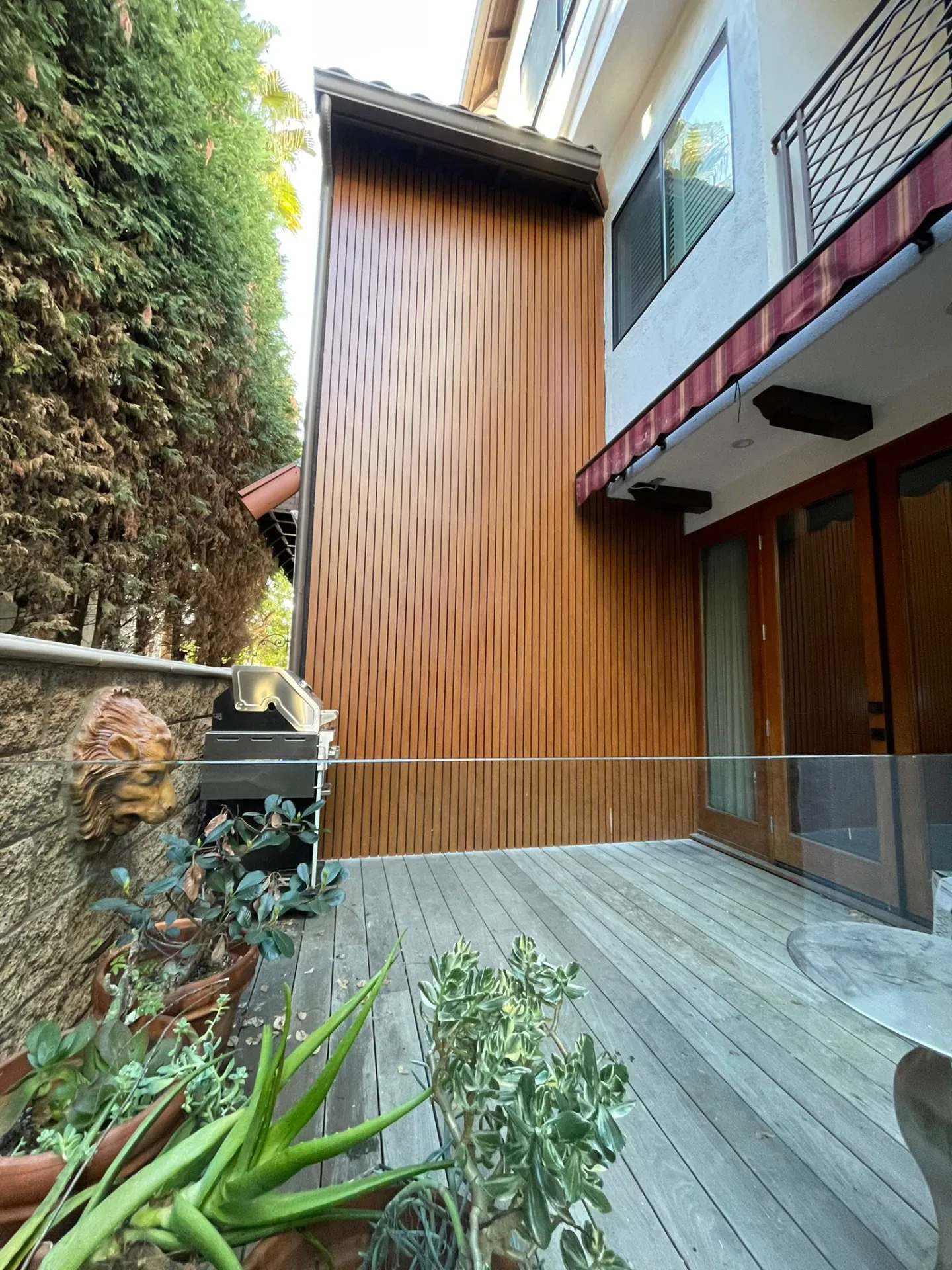
Clicklad panels ship with a factory-applied powder-coat finish on 6063-T5/T6 aluminum, formulated to AAMA 2605. The powder-coat process bonds pigment to substrate at the molecular level (cured at roughly 400 degrees Fahrenheit in-line), which is why it resists chalking and color shift far better than field-applied paint. In practice the maintenance load is light: annual rinse, no abrasives, no harsh chemistry, and the finish should look the same in year 15 as in year 2. Wood-grain panels use a sublimation process over the powder-coat base; maintenance is identical to solid-color panels. The click rail system also makes panel replacement straightforward; because no panel is face-fastened, an installer can release a damaged section and snap a replacement in without disturbing the surrounding wall. For trade-offs vs. competing materials, see aluminum siding pros and cons.
Aluminum vs. Competing Materials on Maintenance
The “low maintenance” claim only lands once you put it next to what wood, vinyl, and fiber cement actually demand.
| Material | Routine maintenance | Repaint / refinish cycle | Replacement horizon |
|---|---|---|---|
| Aluminum (powder-coat, AAMA 2605) | Annual wash, mild detergent | None for 20 to 30 years | 40 to 50 years |
| Wood (cedar, painted) | Annual wash, inspect for rot | Repaint every 5 to 7 years | 20 to 40 years |
| Vinyl | Annual wash, inspect for cracking | Can’t be repainted reliably | 20 to 30 years |
| Fiber cement | Annual wash | Repaint every 10 to 15 years | 30 to 50 years |
| Stucco | Annual wash, inspect for cracks | Recoat / patch every 5 to 10 years | 50+ years |
Over a 40-year hold, an aluminum facade gets washed forty times. A painted wood facade gets washed forty times and repainted six or seven times. The labor difference compounds.
The Bottom Line
Aluminum cladding maintenance is genuinely light, but “light” isn’t “none.” Plan on a yearly wash with mild detergent and water, a five-year sealant and flashing inspection, and a ten-year finish review on high-exposure walls. Stay away from abrasives, solvents, and high-pressure washers. Address rust streaks, hard-water spots, and biological growth before they become permanent. Catch scratched coatings before bare metal sees a winter. Do that, and a powder-coated panel system specified to AAMA 2605 will hit its 20 to 30 year finish warranty without drama, and the substrate behind it will outlast the warranty by another two or three decades.
Have a project that needs cladding spec’d or an existing facade you want to assess? The Clicklad team works directly with architects, builders, facility managers, and homeowners on finish selection, climate-appropriate detailing, and long-term care planning. Talk to our team and we’ll respond with the right system, finish, and maintenance plan for your site.
Frequently Asked Questions
How often should aluminum cladding be cleaned?
Once a year is the baseline for inland, low-pollution sites. Coastal, urban, and wildfire-exposed walls benefit from a twice-yearly wash. The honest test: wipe a white cloth across a shaded panel; if the cloth picks up visible soil or chalk, it's time, regardless of the calendar.
Can I pressure wash aluminum siding?
Yes, carefully. Stay under 1,500 psi, use a wide-fan tip (40 degrees or wider), and hold the nozzle at least 18 inches from the panel face. Higher pressure can drive water past flashings and dull the powder-coat finish. For most homeowners a garden hose and a soft brush deliver a better result with no risk.
Does aluminum cladding need to be repainted?
Not for the warranty life of the finish. A factory powder-coat finish to AAMA 2605 is rated for 10 years on color, gloss, and chalk resistance, with field history past 30 years on well-maintained walls. Re-coating becomes a conversation around year 25 to 30.
What's the best cleaner for aluminum siding?
A 1 to 5 percent solution of mild dish detergent in warm water handles 95 percent of what aluminum cladding picks up. For mildew on shaded walls, a 1:10 household bleach solution rinsed within two minutes. Avoid alkaline cleaners above pH 10, abrasives, and solvents.
Will hard water from sprinklers damage my aluminum cladding?
Not the substrate, but it leaves a calcium film that dulls the finish. Aim sprinklers so spray doesn't hit the wall. Clean existing deposits with a 1:3 vinegar-water solution applied with a soft cloth and rinsed promptly.