
Most siding comparison articles read like brochures. The “pros” section runs long and glowing; the “cons” section is two sentences about how “some homeowners may prefer the look of natural wood.” That isn’t a comparison. It’s marketing dressed up as analysis.
Aluminum siding is the right choice for many homes in 2026, particularly anywhere fire codes matter, but it has real limitations that buyers deserve to see laid out plainly. Some are inconvenient. A few are deal-breakers in specific use cases. Walking through the honest aluminum siding pros and cons before signing a contract will save a homeowner more frustration than a glossy spec sheet ever will.
This breakdown covers the genuine advantages, the genuine drawbacks, and the three or four myths that get repeated in homeowner forums but don’t survive contact with how the product actually performs.
The Quick Answer: The Honest Two-Sided Take
The pros: non-combustible under California fire codes, a 40 to 50 year service life, no painting or recoating maintenance, fully recyclable, and finish options that now include realistic wood-grain visuals. The cons: roughly twice the upfront cost of vinyl, a real (though modest) risk of cosmetic denting from impact, and acoustic concerns under heavy rain or hail if the wall assembly isn’t detailed correctly.
| Pros | Cons |
|---|---|
| Non-combustible, Class A under ASTM E84 | Roughly double the upfront cost of vinyl |
| 40 to 50 year service life | Cosmetic dent risk under hard impact (baseball, large hail) |
| Effectively zero maintenance | Acoustic transmission if the wall assembly isn’t detailed correctly |
| Up to 80% recycled content, fully recyclable | Thermal bridging if fastener details lack a thermal break |
| Lightweight (about one-third the weight of fiber cement) | Not a DIY repair material, needs a familiar contractor |
| Modern wood-grain and architectural finish options | Installer familiarity varies in smaller markets |
For most California homeowners, especially anyone building or rebuilding in a Fire Hazard Severity Zone, the pros outweigh the cons. For tight-budget rentals outside fire zones with short ownership horizons, vinyl is still defensible.
The Real Pros, in Order of How Much They Matter
Fire performance: the argument that has changed the market
Aluminum is non-combustible under ASTM E136 and carries a Class A rating under ASTM E84 when properly finished. In California Fire Hazard Severity Zones, that classification isn’t a “nice to have.” It’s the difference between an insurable home and an uninsurable one, and between a code-compliant rebuild and a permit denial. The CAL FIRE Building Materials Listing for wildland-urban interface use is dominated by aluminum products. For the deeper fire breakdown, see is aluminum siding fire resistant.
40 to 50 year service life
The aluminum substrate doesn’t rot, doesn’t warp, and doesn’t host pests. The powder-coat finish, when formulated to the AAMA 2605 specification, holds color and integrity for decades without recoating. Real-world installations from the 1970s and 1980s are still on California homes today, faded but structurally sound. Compare that against vinyl’s 20 to 30 year practical life or cedar’s 2 to 4 year reseal cycle, and the lifespan advantage compounds across an ownership horizon.
Effectively zero maintenance
Annual hose-down with water, and that’s it. No painting, no caulking, no recoating, no annual inspection for rot or insect damage. The maintenance burden of real cedar in coastal California runs $0.50 to $1.50 per square foot per year, all of which simply doesn’t apply to an aluminum facade.
Fully recyclable, with high recycled content available
Aluminum is the most-recycled metal in the world by volume. Clicklad’s panels use a minimum of 80% recycled content and the panels themselves are fully recyclable at end of life. For projects pursuing LEED, Living Building Challenge, or local green-building credits, this is a measurable advantage over vinyl, fiber cement, or wood.
Lightweight install
A typical aluminum siding panel weighs roughly one-third of a fiber-cement plank of equivalent coverage. That difference shows up in three places: lower freight cost, faster install time, and lower structural load on the framing. For retrofits and seismic-zone projects, the weight savings are real.
Finish flexibility, including modern wood-grain
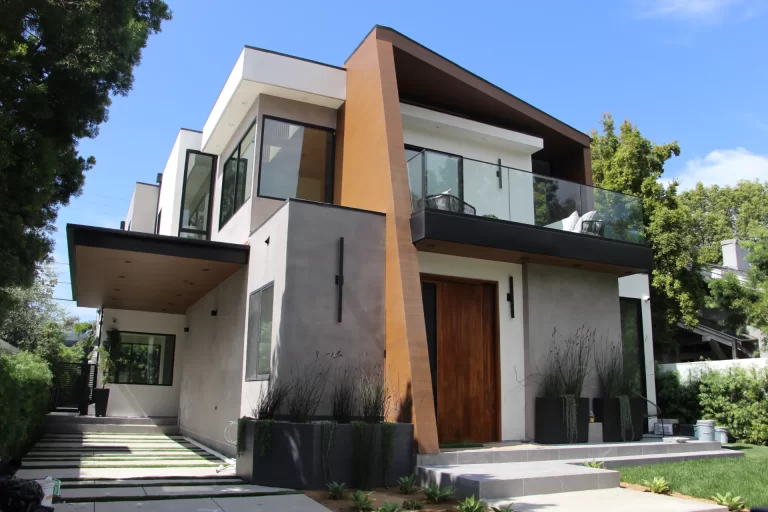
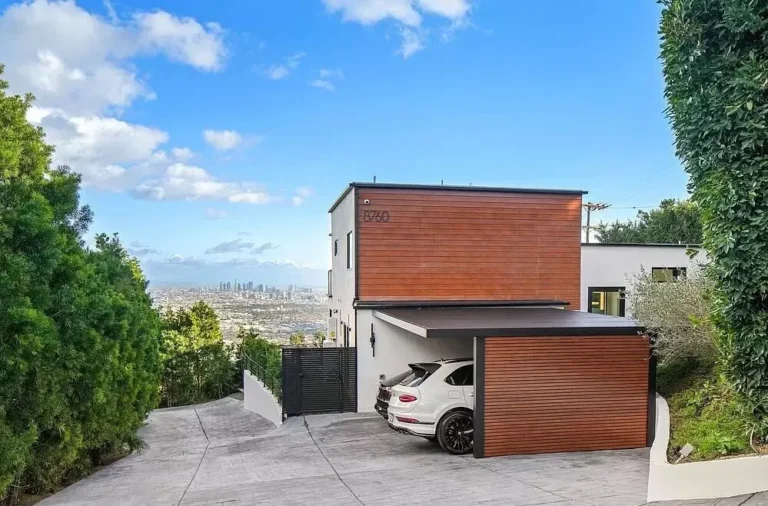
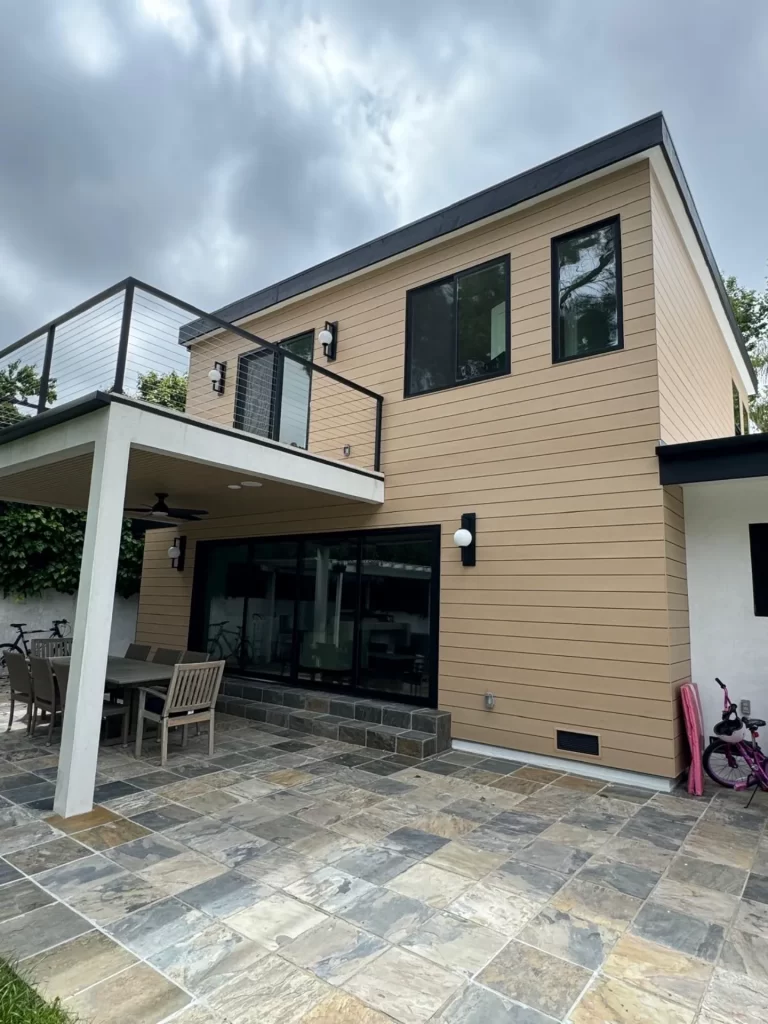
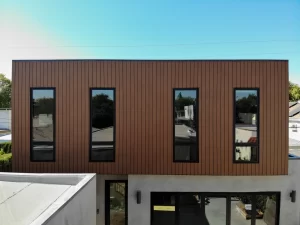
The strongest aesthetic argument used to favor wood and vinyl. That gap has closed. Sublimated wood-grain finishes on aluminum panels now read as cedar from any normal viewing distance, while powder-coat solid colors cover the full architectural palette. Custom colors and species are available on minimum order quantities. For the deeper treatment, see aluminum siding wood grain.
The Real Cons, Stated Plainly
Upfront cost: roughly double vinyl
Aluminum installs at $7 to $15 per square foot. Vinyl installs at $3 to $7 per square foot. On a 2,000 square foot exterior, that’s a gap of $8,000 to $16,000 at the start of the project. The math flips later, because vinyl needs replacement on a 20 to 25 year cycle while aluminum lasts 40 to 50, but the day-one cash difference is real. For homeowners with short ownership horizons or tight budgets, this is the most legitimate reason to pick something else.
Dent risk under impact
This is the most common objection and it deserves an honest answer. Aluminum is softer than steel, which means a baseball, a thrown rock, or a piece of hail can leave a permanent dent. The dent is cosmetic, the panel still seals and still resists fire, but the visual mark is real and doesn’t pop back out the way some vinyl flexes do.
Two things temper this concern. First, modern aluminum siding uses thicker gauges and stiffer panel profiles than the 1970s aluminum that gave the material its dent-prone reputation; current 1.4mm Clicklad panels handle normal incidental contact without marking. Second, individual panels can be replaced cleanly under a click-install system without disturbing adjacent panels, which makes dent repair tractable rather than a project-wide refinish.
The Insurance Institute for Business & Home Safety publishes hail-impact ratings for siding products; mid-grade and premium aluminum siding falls in the “moderate impact resistance” range, which translates to denting from anything larger than a golf-ball-sized hailstone but no penetration or seal failure even at severe hail sizes.
Acoustic transmission under heavy rain or hail
Rain on an undetailed aluminum wall can be audible inside the home, particularly in upper-floor rooms directly behind a wall-mounted assembly. This concern is real but usually fixable with three details that should be in any well-designed install: a rainscreen air gap behind the panel, a fully insulated wall cavity with mineral wool or batt insulation, and proper sheathing under the panel rather than direct-to-stud mounting. Done correctly, aluminum is no louder inside than fiber cement. Done poorly, it can sound like rain on a metal roof.
Thermal bridging if poorly detailed
Aluminum conducts heat efficiently. If aluminum panels are fastened directly to a wood-frame wall without thermal breaks, the fasteners and panel edges become heat-loss pathways in cold weather and heat-gain pathways in summer. This is a detail problem, not a material problem; well-designed click systems use a structural rail with thermal-break detailing at the fastener interface. Clicklad’s click rail system addresses this by design, but it’s worth asking any aluminum siding contractor specifically how they handle thermal bridging at the rail-to-stud connection.
Repair logistics: not a DIY material
A vinyl panel can be replaced by a moderately handy homeowner with a zip tool. Aluminum panel replacement requires a contractor familiar with the specific click-install system or fastening detail used. For homes in remote markets where local installer familiarity is low, this can mean longer repair waits and higher hourly rates.
The Myths That Aren’t Actually Cons
A few claims surface frequently in homeowner forums and contractor sales pitches. They’re worth addressing because they distort the comparison.
“Aluminum siding fades quickly.” False for modern AAMA 2605 powder-coat finishes. The 1970s vintage of aluminum siding earned this reputation with one- and two-coat paint systems that did fade. Current architectural-grade powder coats hold color for 30 years or more with no visible degradation.
“You can’t paint aluminum siding, so you’re stuck with the original color.” Partially true and largely irrelevant. Powder-coated aluminum can be field-painted with the right primer (zinc chromate or self-etching), though the finish won’t match the durability of the factory coat. The bigger answer is that the factory finish is meant to last 30+ years, so the question of repainting almost never arises within a reasonable ownership horizon.
“Aluminum siding looks cheap or industrial.” This was true of the 1970s product. Modern wood-grain finishes and architectural color palettes have eliminated the “industrial” objection on residential projects. The look of current Clicklad panels is design-led, not commodity.
“Aluminum will corrode in coastal climates.” Mostly false. Bare aluminum can develop surface oxidation in heavy salt-spray environments, but powder-coated panels have the substrate fully sealed from environmental exposure. The 6063-T5/T6 alloy used in Clicklad’s panels is the same alloy used in marine architectural applications precisely because it resists salt-air corrosion.
When Aluminum Is the Right Pick (and When It Isn’t)
The decision usually comes down to four questions.
Are you building or rebuilding in a Fire Hazard Severity Zone? If yes, aluminum (or another non-combustible material like fiber cement or stone) is essentially mandatory. Vinyl and natural wood are not code-compliant in most CalFire-designated WUI zones.
Is your ownership horizon longer than 15 years? If yes, the lifespan math favors aluminum strongly. If you plan to sell within 5 to 7 years and aren’t in a fire zone, the upfront cost gap with vinyl is harder to justify.
Does the design specifically call for warm or natural-material aesthetics? If yes, modern wood-grain aluminum can deliver the look without the maintenance cost of real wood. If the design is going for stone, stucco, or board-formed concrete, aluminum probably isn’t the right material at all.
Is the project in an area exposed to severe hail (1.5″+ stones) on a regular basis? If yes, steel siding may be a better match than aluminum. Most California projects don’t face this concern.
Aluminum siding fits best on California residential and commercial projects with 15+ year ownership horizons, design briefs that call for clean modern or warm wood aesthetics, and fire-code-sensitive sites. It’s less of a fit for ultra-budget builds, short-hold investment properties in safe climates, or severe-hail markets in the central US.
Working out whether aluminum fits your project? Pull the Clicklad spec sheets from resources for a side-by-side against your alternatives, or get in touch with our team to walk through the trade-offs in your specific context.
The Bottom Line
The honest pros and cons land in a clear place: for the typical California homeowner in 2026, especially anyone touching a Fire Hazard Severity Zone or planning to stay in the home long-term, aluminum siding is the better choice across the dimensions that matter most. The genuine drawbacks (upfront cost, dent risk, acoustic detailing) are tractable, well-understood, and decision-shaping rather than disqualifying. The fake drawbacks (fading, corrosion, “industrial look”) don’t survive contact with how the modern product actually performs.
For most projects, the right comparison isn’t really aluminum versus vinyl. It’s aluminum versus the cost of replacing vinyl twice over the next 40 years, plus the insurance and code constraints of the next major fire event. When framed that way, the math becomes obvious for most California homes.
Trying to decide if aluminum fits your specific project? Get in touch with our team and we’ll work through the relevant pros and cons in the context of your site, code requirements, and design intent, then recommend a path forward.
Frequently Asked Questions
Does aluminum siding dent easily?
Modern thicker-gauge aluminum siding (around 1.4mm) handles normal contact without denting. Severe impact (a baseball, large hail, a fallen branch) can leave a permanent cosmetic dent. The panel still seals and resists fire after a dent; the impact is visual only. Individual panels can be replaced cleanly under a click-install system.
Is aluminum siding noisy in the rain?
Properly detailed installations with a rainscreen air gap, insulated wall cavity, and sheathing behind the panel are no louder than fiber cement. Direct-to-stud installs without these details can transmit rain noise audibly. Acoustic performance depends on wall assembly, not just the cladding choice.
How much more does aluminum siding cost than vinyl?
Roughly double on day one. Aluminum runs $7 to $15 per square foot installed; vinyl runs $3 to $7. Across a 40-year ownership horizon the math reverses because vinyl typically needs full replacement every 20 to 25 years while aluminum lasts 40 to 50 years on average.
Can you paint aluminum siding?
Yes, with appropriate primer (zinc chromate or self-etching) for adhesion, but the factory powder-coat finish is designed to last 30+ years with no recoating. Most homeowners never need to repaint within a normal ownership horizon. The argument for picking the right factory color upfront is stronger than the argument for repainting later.
Is aluminum siding a good investment for resale?
In fire-aware California buyer markets, yes. Aluminum and other non-combustible materials carry a measurable resale premium of roughly 1 to 3 percent compared to vinyl in the same neighborhoods, particularly in Fire Hazard Severity Zones. Insurance availability and lower premiums on Class A rated homes also factor into buyer perception of value.