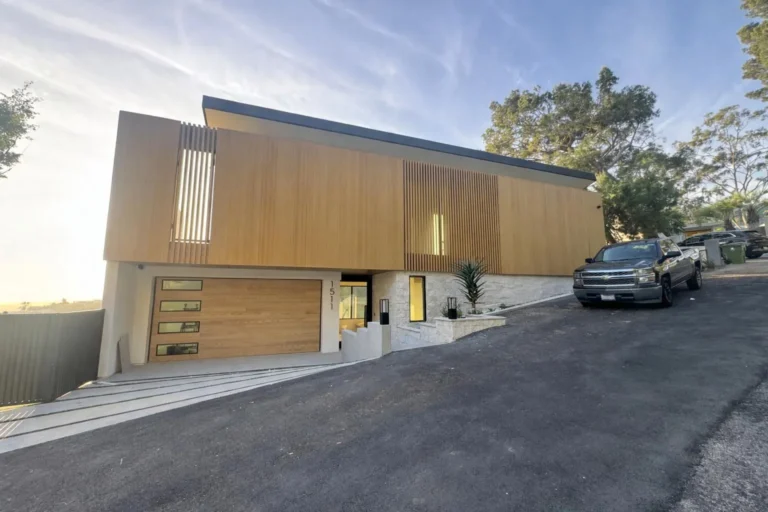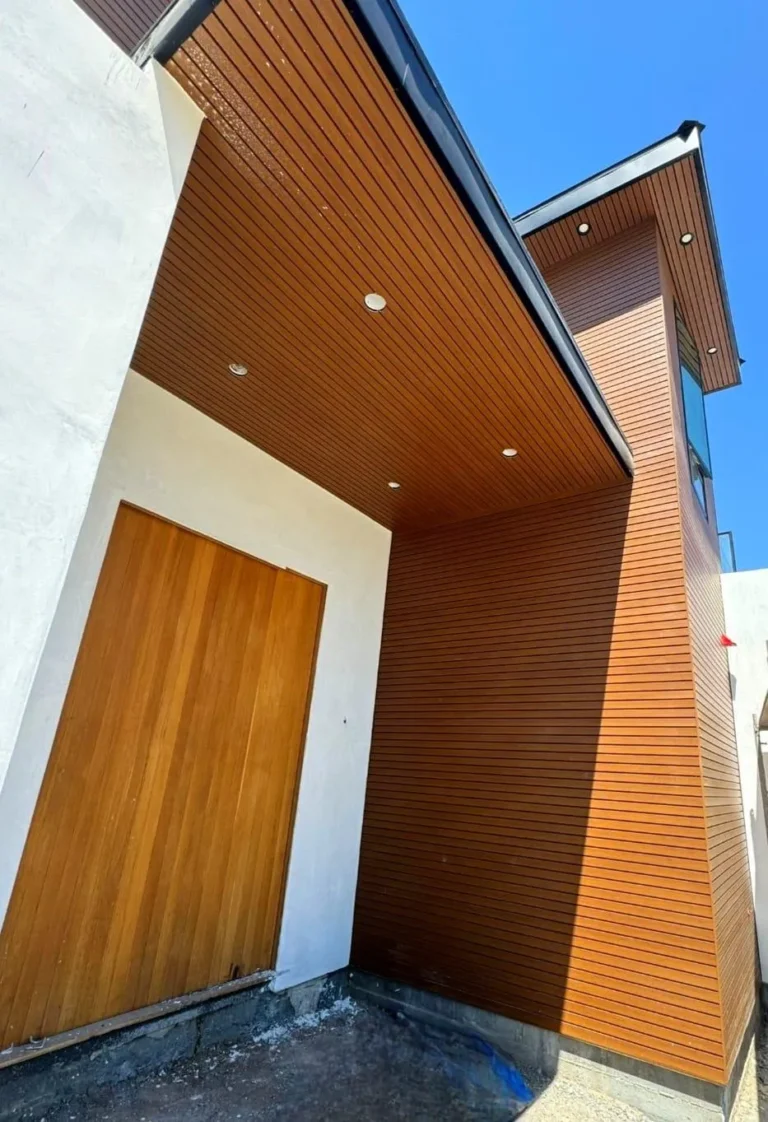

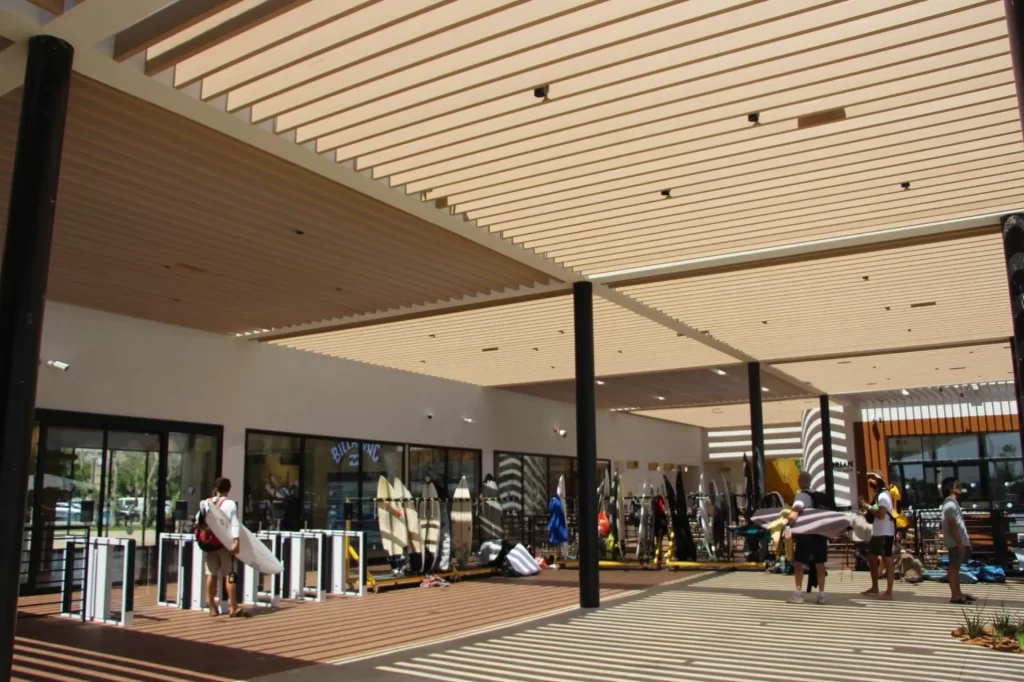
A pergola is the one structure people build for pleasure and then fight to keep. The wood version looks beautiful the first summer, then the California sun gets to it. The beams check and grey, the stain peels, a few boards cup, and every couple of years the whole thing needs sanding and recoating to avoid looking neglected. Overhead, where you can’t easily reach it, that maintenance is worse. And in a wildfire zone, a large combustible structure attached to the house is exactly the kind of thing insurers and code officials have started to push back on. An aluminum pergola removes all of that: the warm, lined look of a timber shade structure in a material that doesn’t rot, warp, splinter, or burn. This guide covers aluminum pergolas, trellises, and sunshades, how they differ, why aluminum beats wood overhead, and how to match the structure to your cladding.
The payoff is a shade structure you build once and then simply use, instead of a seasonal project that quietly degrades over the yard furniture.
The Quick Answer: Why Aluminum Over Wood
An aluminum pergola or trellis gives you the wood look without the wood problems. Aluminum doesn’t rot, warp, splinter, or need refinishing, it’s non-combustible in a fire zone, and modern wood-grain finishes make it read as real timber, in open-slat, louvered, attached, or freestanding configurations. Wood pergolas cost less up front and demand sanding and restaining on a cycle, and they’re a combustible structure overhead. Aluminum trades a higher entry price for a structure that holds its finish for decades and asks for almost nothing.
| Overhead shade | Fire | Rot / warp | Refinishing | Lifespan |
|---|---|---|---|---|
| Wood pergola | Combustible | Checks, cups, rots | Sand and stain every 2 to 3 yrs | 10 to 20 years |
| Vinyl / plastic | Melts, sags | Resists | None, but yellows | 10 to 20 years |
| Aluminum pergola | Non-combustible | Immune | None | 30+ years |
The rest of this guide explains the options and the reasoning.
Pergola, Trellis, Sunshade: What’s the Difference
These words get used loosely, so here’s the practical version.
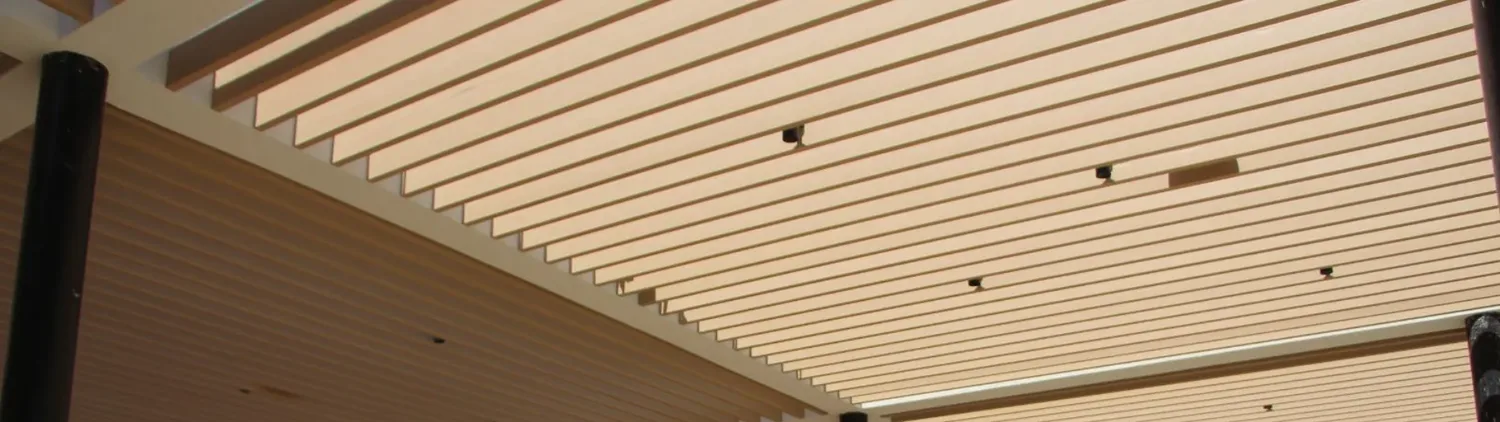
- A pergola is a freestanding or attached overhead structure with posts and a slatted or louvered top that casts patterned shade over a patio or walkway.
- A trellis is the slatted framework itself, the repeated members that create the shade and the rhythm. In architecture, a trellis often runs as a horizontal shade element off a building or as a screen.
- A sunshade, or brise-soleil, is a trellis-like array set over windows or a facade to cut solar heat gain while keeping the view.
- Battens are the individual linear profiles that make up all of the above, the slats you actually see.
Clicklad builds the aluminum trellis, batten, and sunshade systems that create all of these, in the same wood-look finishes as the wall cladding, so a pergola over the patio can match the facade of the house behind it.
Why Aluminum Beats Wood Overhead
Wood overhead is the hardest place to maintain and the worst place to have a fire risk. Wood is hygroscopic, so beams exposed to sun and rain check, cup, and grey, and the stain that slows it down breaks down in two to three years. Recoating a pergola means working above your head across the whole structure, which is why so many wood pergolas end up weathered and splintering. Wood is also combustible, and a large wood structure attached to a house in a wildland-urban interface zone is a real exposure.
Aluminum answers each point. It doesn’t absorb moisture, so it can’t rot, cup, or splinter. It’s dimensionally stable in heat and cold, so the louvers and slats stay straight. A factory powder-coat finish holds its color for decades with no sanding or staining, and it’s non-combustible, tested to ASTM E136 and rated Class A under ASTM E84. You get the cedar or walnut look overhead and delete the ladder-work and the fire risk. For how long aluminum holds its finish outdoors, see our guide on how long aluminum cladding lasts.
Configurations and Uses
Aluminum shade structures are flexible because the profiles are light and strong.
- Freestanding pergola over a patio, pool deck, or garden, carried on its own posts.
- Attached pergola off the house wall, extending the living space outward with coordinated detailing.
- Open-slat trellis that casts fixed, patterned shade and a strong architectural rhythm.
- Sunshade over windows that blocks high summer sun while keeping winter light and the view, cutting cooling load on the glassy side of a building.
- Vertical battens or screens for privacy and facade texture, using the same profile family.
Because the members are aluminum, long spans and clean cantilevers are practical without the sag or seasonal movement wood brings.
Planning a pergola, trellis, or sunshade? The Clicklad team works with homeowners, architects, and builders on aluminum shade structures in wood-look finishes. The documentation is in our resources library, and you can talk to our team about the right configuration for your space.
Design: Matching Your Pergola to the Cladding
A pergola doesn’t live in isolation, it sits in front of a facade, and the two either agree or clash. The strongest outdoor spaces treat the shade structure as part of the building’s material language rather than a separate garden object.
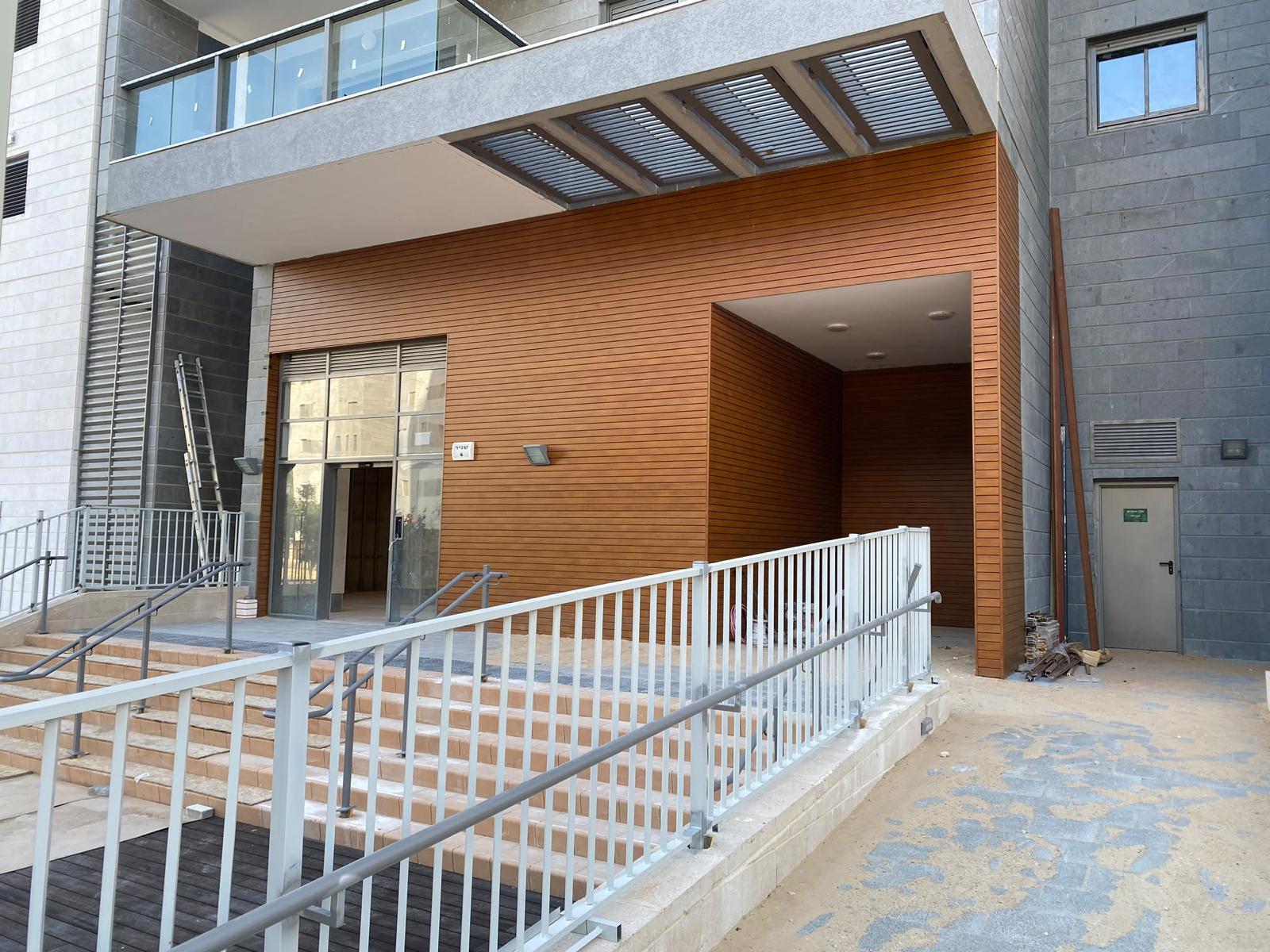
That is where aluminum has a real advantage. Because the trellis, the battens, and the wall cladding come from the same line in the same wood-look finishes, a pergola over the patio can carry the exact walnut or teak tone of the exterior cladding on the house behind it. The overhead slats, the facade, and the soffit at the eave all read as one coordinated system. If you’re choosing the wall material at the same time, our comparison of metal cladding versus wood and fiber cement explains why aluminum wins on the wall too, and the wood-grain finishes are the same ones you’d run overhead.
Fire Zones and the Overhead Question
In much of California, a combustible structure attached to or near the house is no longer a neutral choice. Wildland-urban interface rules under Chapter 7A push toward non-combustible exterior construction, and insurers increasingly price against large wood structures. An aluminum pergola or sunshade is non-combustible, so it doesn’t add fuel where a wood pergola would, which matters both for code and for the insurance conversation on a fire-zone property.
Installation at a Glance
Aluminum shade structures assemble from engineered profiles and connectors rather than cut-and-nailed lumber. The battens and louvers mount to supporting members on a coordinated system, which keeps the look clean and the geometry precise, and makes long runs and repeatable spacing straightforward. Post footings, spans, wind loads, and attachment details are engineered per project and should be reviewed for your site and local code.
The Bottom Line
A pergola should be the easy part of a backyard, not a recurring chore or a fire worry. Wood gives you the look and takes it back through checking, greying, restaining, and combustibility. Aluminum keeps the wood look and removes all of it: no rot, no warp, no refinishing, and non-combustible overhead. And because the trellis, battens, and sunshades share the finishes of the wall cladding, the structure ties into the architecture instead of sitting apart from it.
Have an outdoor space in mind? Clicklad manufactures aluminum trellis, batten, and sunshade systems in Gardena, California, in wood-look finishes that coordinate with the cladding. Get in touch with our team and we’ll come back with the right configuration, finish, and detailing, or browse the full line on our products page.
Frequently Asked Questions
Is an aluminum pergola better than a wood pergola?
For most owners, yes. A wood pergola looks warm but needs sanding and restaining every few years, it checks and greys overhead where maintenance is hardest, and it's combustible. Aluminum keeps the wood look, never needs refinishing, won't rot or warp, and is non-combustible. Wood wins only on lowest upfront price.
Does an aluminum pergola rust?
No. Aluminum doesn't rust. It forms a natural protective oxide layer, and a powder-coat finish adds decades of color retention, so an aluminum pergola holds up in sun, rain, and coastal air without the corrosion a steel structure can develop.
What is the difference between a pergola and a trellis?
A pergola is the overhead shade structure with posts and a slatted or louvered top. A trellis is the slatted framework that creates the shade, which can be the top of a pergola or a horizontal shade element off a building. Clicklad's aluminum trellis and batten systems are used to build both.
Can an aluminum pergola match my house cladding?
Yes. Clicklad's trellis, batten, and sunshade systems use the same wood-grain and solid powder-coat finishes as the wall cladding and soffit, so the pergola can carry the exact tone of the facade and read as part of the same system.
Is an aluminum pergola good for fire zones?
Yes. Aluminum is non-combustible, so unlike a wood pergola it doesn't add fuel near the house. In California wildland-urban interface areas this supports both Chapter 7A compliance and the insurance conversation on a fire-zone property.