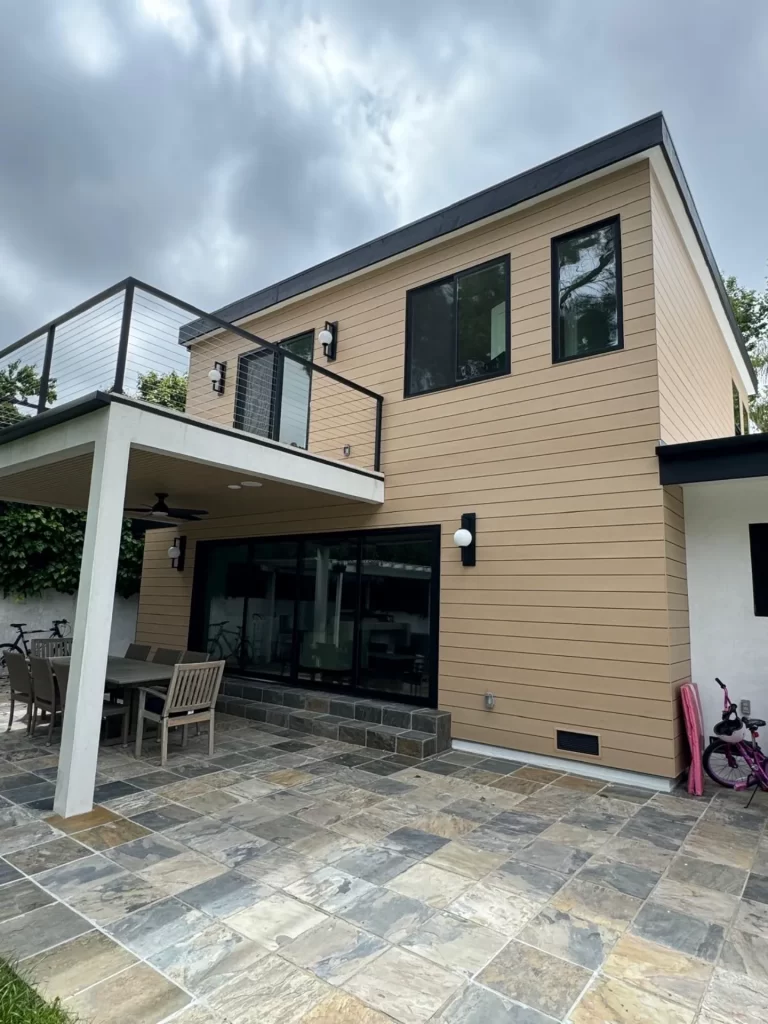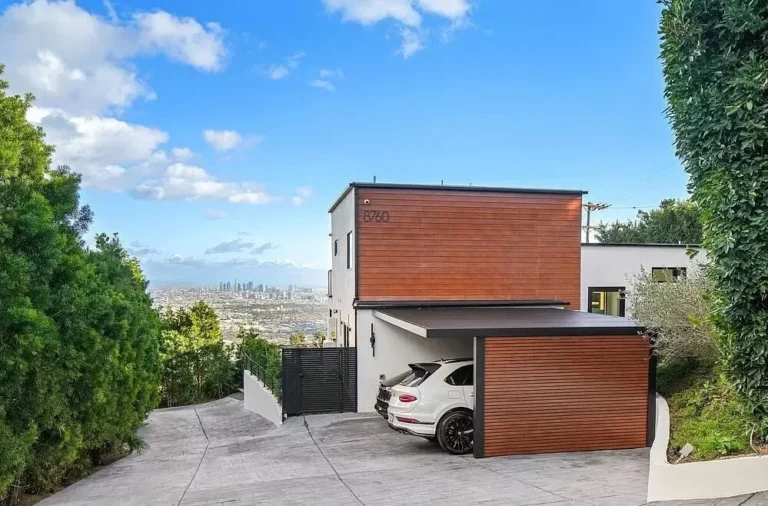

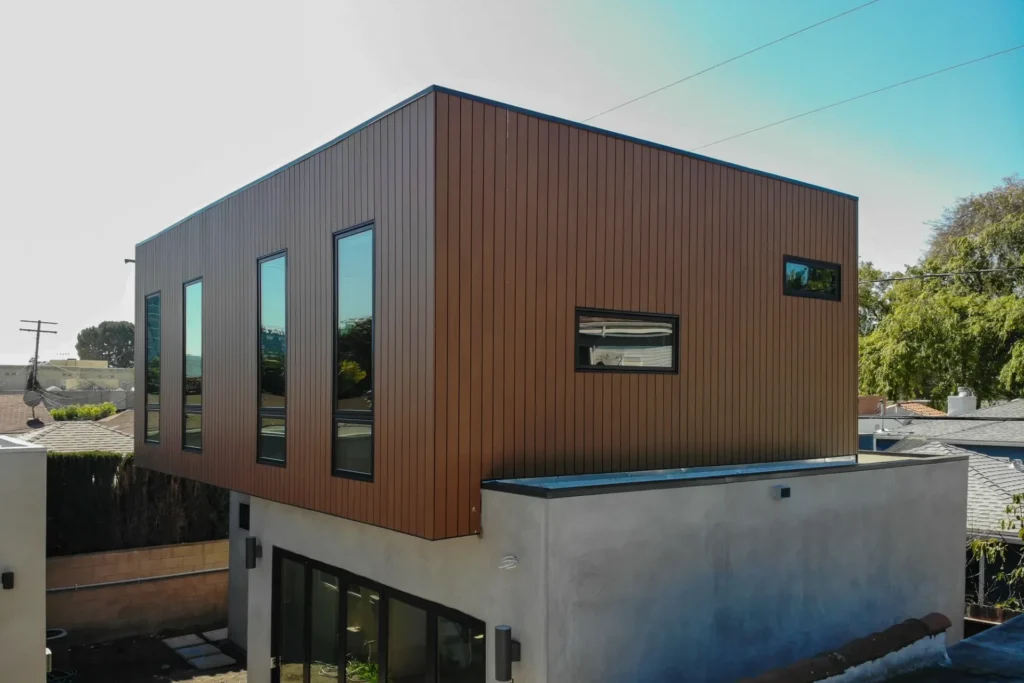
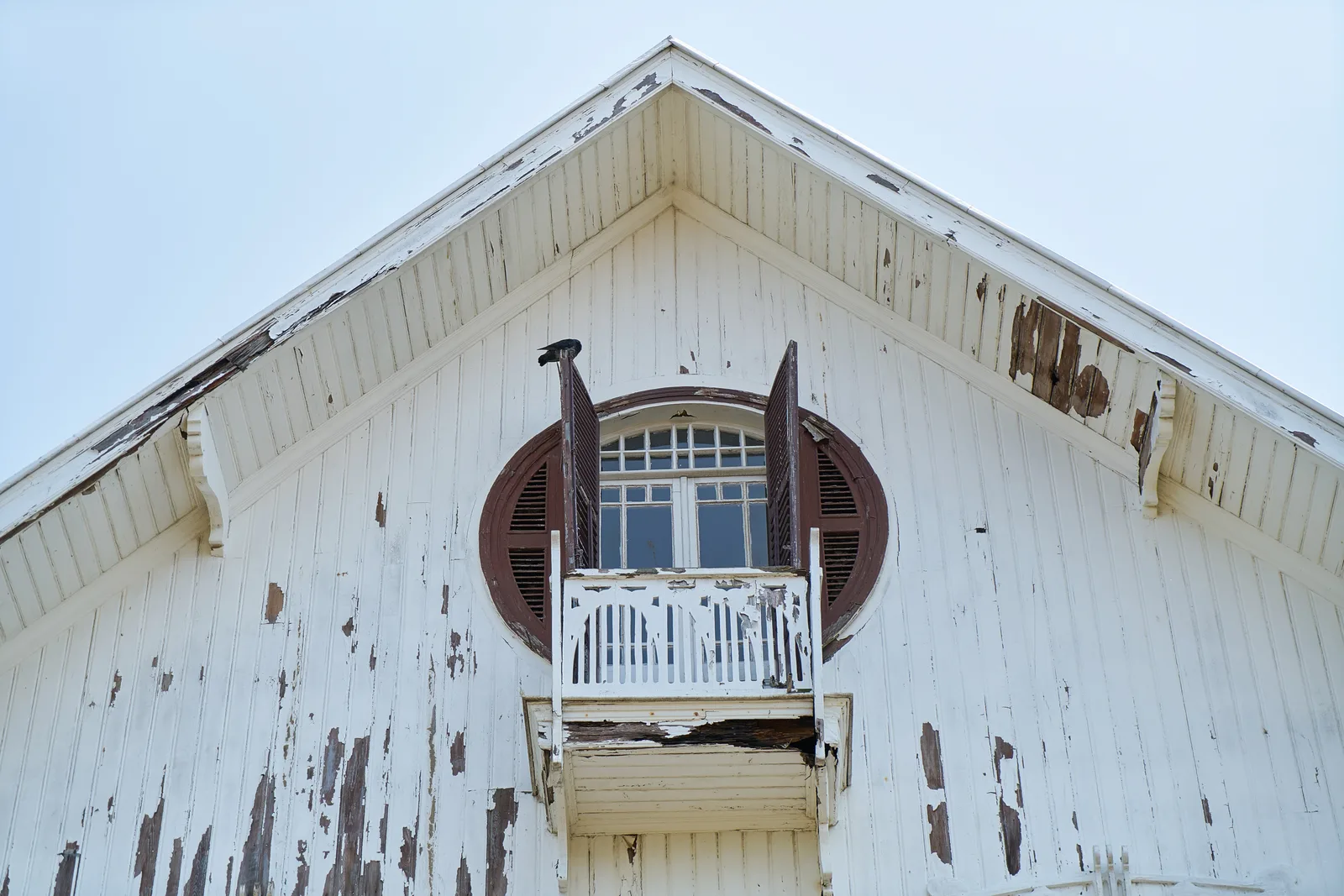
Walk any older street after a wet winter and the evidence is on the walls. Wood siding that has cupped, split, and gone grey at the bottom courses. Fiber cement with a hairline crack running off a fastener and a chalky film where the paint is giving up. Vinyl that has rippled on the sun-facing elevation. None of these materials failed because someone bought the cheap version. They failed because that is what these materials do over time. Aluminum is the exception, and that is the whole argument for it. This guide puts metal cladding head to head against wood, fiber cement, and vinyl, shows exactly where each one breaks down, and explains why aluminum keeps winning the swap.
This isn’t a neutral survey of every option (for that, see our guide to exterior cladding materials). It’s the case for aluminum, made against the specific materials it replaces, with the reasons spelled out rather than asserted.
The Quick Answer: Why Aluminum Comes Out Ahead
Aluminum cladding wins because it removes the failure modes built into the other materials. It doesn’t burn, rot, rust, warp, or need refinishing, and a factory finish holds its color for decades. Wood rots and burns. Fiber cement cracks, chalks, and needs repainting. Vinyl warps and melts. Steel rusts where its coating is breached. Aluminum sidesteps all four, at a weight light enough to install fast on a click-rail system and in finishes that look like real wood.
| What fails a wall | Wood | Fiber cement | Vinyl | Steel | Aluminum |
|---|---|---|---|---|---|
| Fire | Burns | Non-combustible | Melts | Non-combustible | Non-combustible (Class A) |
| Moisture / rot | Rots, cups | Absorbs at edges | Resists | Resists | Immune |
| Warping | Yes | No | Yes (heat) | Can oil-can | No |
| Refinishing | Every 2 to 5 yrs | Repaint ~10 to 15 yrs | None, but fades | Repaint if scratched | None |
| Rust | n/a | n/a | n/a | Yes | Never |
| Real-world lifespan | 20 to 40 yrs | 30 to 50 yrs | 20 to 30 yrs | 30 to 40 yrs | 40 to 50+ yrs |
The rest of this article is the reasoning behind each row.
Aluminum vs Wood: The Rot, Warp, and Burn Problem
Wood is the look everyone wants and the material that fights you the hardest to keep it. The reason is physical: wood is hygroscopic, so it constantly takes on and gives off moisture with the weather. That movement is what makes wood cup, split, and check, and it’s what opens the door to rot and insects at the end grain and the bottom courses. To slow it down you re-oil or re-stain every two to five years, for the life of the building. Miss a cycle and the greying and cracking accelerate.
Then there’s fire. Wood is combustible, full stop, which in a California wildland-urban interface zone means it’s either heavily restricted or refused outright by code and by insurers.
Aluminum answers all of that with the material itself. It doesn’t absorb water, so it can’t rot, cup, or feed termites. It’s dimensionally stable, so it doesn’t move with humidity. It’s non-combustible. And a modern wood-grain finish gives you the cedar or walnut look on a panel that never needs the stain. You get the wood aesthetic and delete the wood maintenance.
Aluminum vs Fiber Cement: Cracks, Chalk, and Weight
Fiber cement is the sensible upgrade from wood, and it’s a genuinely good material. But it carries its own failure modes that show up on year-ten walls. Because it’s a cement composite, it’s brittle: it can crack or chip on impact and hairline-crack at fastener points, and cut edges have to be sealed or they wick moisture. It holds paint well, but “holds paint” still means a repaint roughly every ten to fifteen years, and older boards chalk as the surface weathers. It’s also heavy, which makes it slower and more labor-intensive to hang and puts more load on the structure. Cutting it releases silica dust that has to be managed on site.
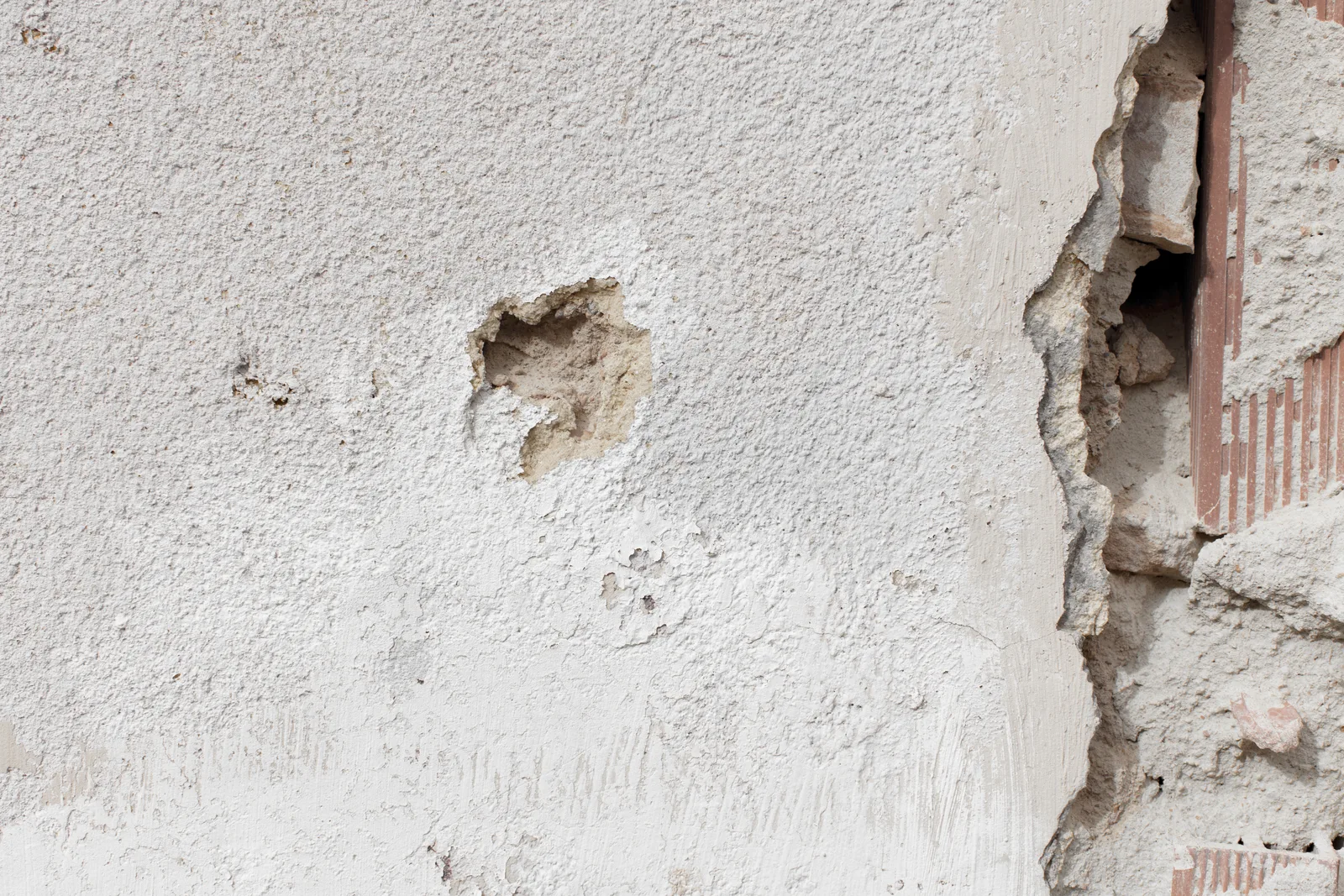
Aluminum keeps the one thing that matters, non-combustibility, and drops the rest. It won’t crack or chip the way a cement board does, the powder-coat finish doesn’t need repainting on a cycle, and it weighs a fraction as much, so it installs faster on a rail system and asks less of the frame. Same fire performance, far less day-two work.
Aluminum vs Vinyl: Melting, Fading, and No Fire Rating
Vinyl competes on one thing: the lowest sticker price. Everything after that is a compromise. It’s a PVC product, so it softens and warps around 160 to 165 degrees Fahrenheit, which real walls hit from direct sun, reflected glare off a neighbor’s window, or a grill placed too close. It gets brittle and cracks in cold. It fades. And it carries no meaningful fire rating, so it isn’t approved for most California fire zones.
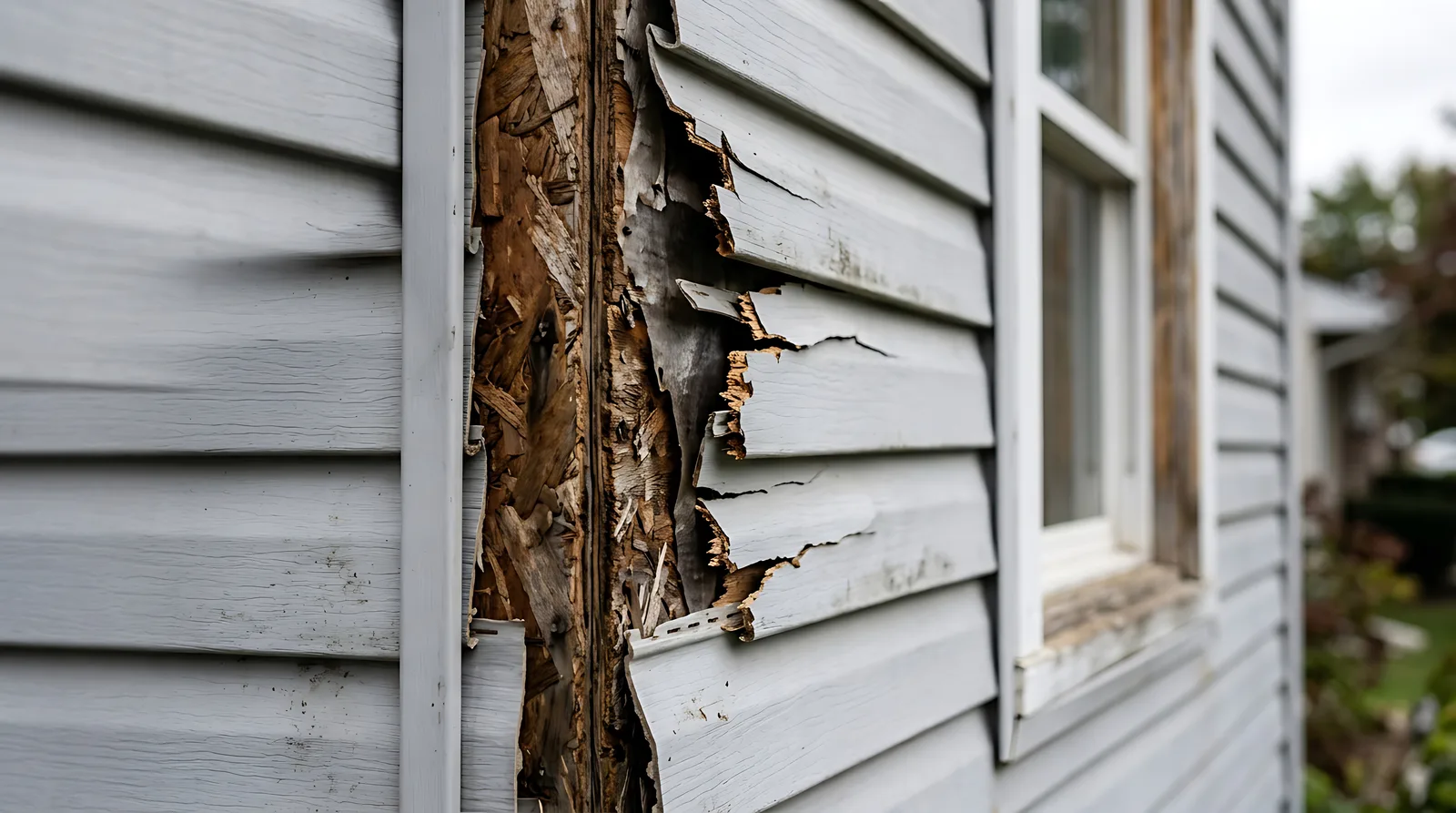
Aluminum costs more up front and gives you a wall that doesn’t warp in heat, doesn’t crack in cold, holds its color for decades, and carries a Class A fire rating. For anyone keeping the building longer than a few years, that’s not a close call.
Aluminum vs Steel and Other Metals: The Rust Question
Not all metal cladding behaves the same, which is worth knowing if you’re comparing within the category. Steel is strong and cheaper per panel, but it’s a ferrous metal, so wherever its protective coating is scratched, cut, or breached, it can rust. On a large facade over years, that’s a real maintenance exposure. Weathering steel makes a feature of the rust, but that’s a specific look with careful detailing to avoid staining below it. Zinc and copper are excellent and long-lived, but they’re premium-priced architectural metals.
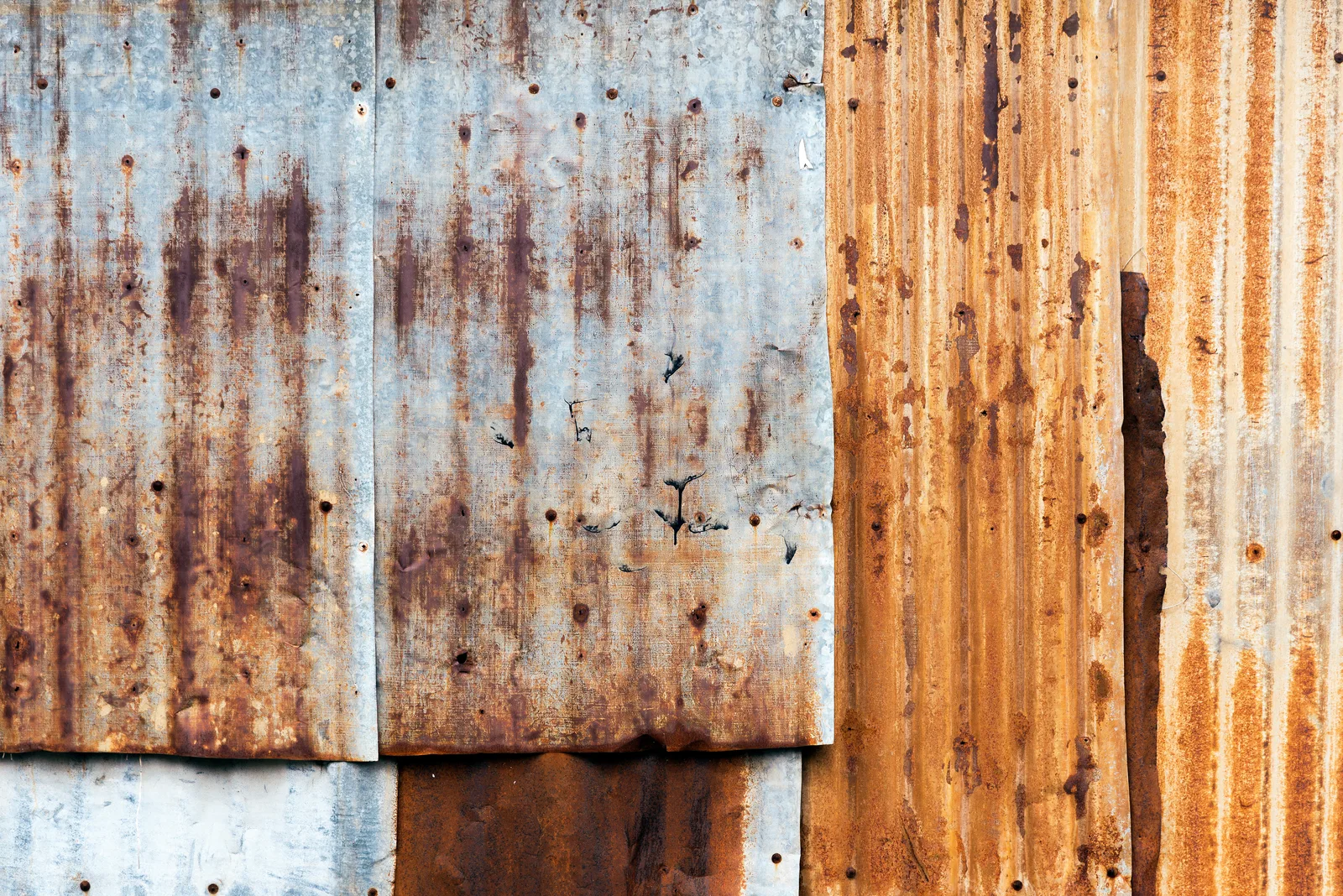
Aluminum’s advantage here is chemistry. It forms a thin, self-repairing oxide layer the instant it’s exposed to air, so it never rusts, even at a cut edge or a scratch. That’s why aluminum, not steel, is the metal that fits the widest range of homes and buildings without a corrosion worry.
Where Aluminum’s Advantages Actually Come From
The reason aluminum can make all those claims is the material plus the system behind it. Clicklad’s panels are 6063-T5/T6 aluminum, 1.4mm thick, on 2.5mm click rails, powder-coated for a finish that resists fading and chalking for decades. The metal is non-combustible, tested to ASTM E136 and rated Class A under ASTM E84, and listed under ICC-ES report ESR-5054 with a CAL FIRE Office of the State Fire Marshal listing for wildland-urban interface siding. Up to 80% of the aluminum is recycled content, and because the panels click onto rails with no face screws, the wall goes up faster and a single panel can be released later if it’s ever damaged.
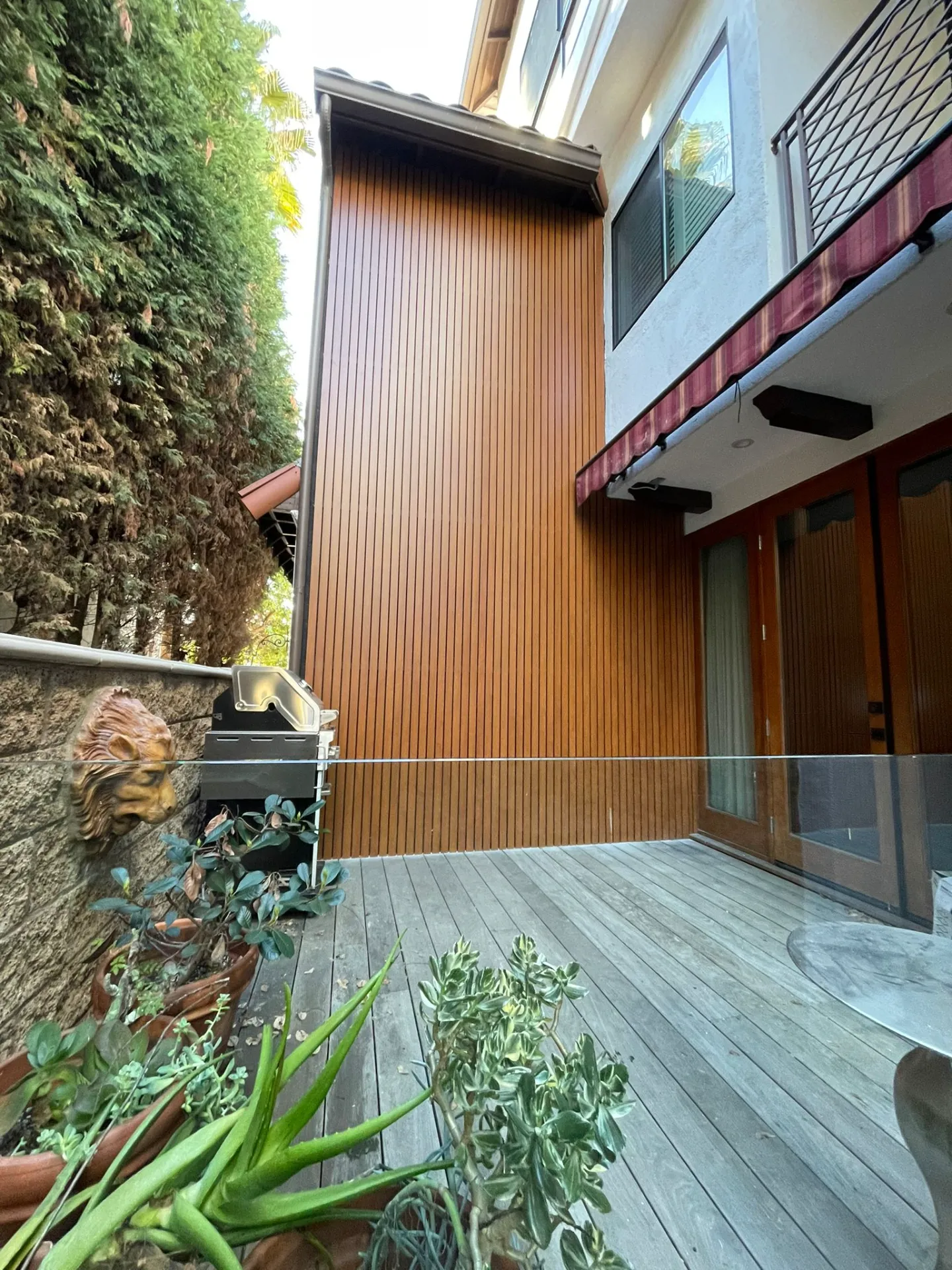
That last point matters for the honest trade-off below.
Comparing materials for a real project? The ICC-ES ESR-5054 report and full system documentation are in the Clicklad resources library. For a spec matched to your wall, talk to our team and we’ll walk through finish, panel, and rail options.
The Honest Trade-Offs
No material is perfect, and pretending otherwise costs credibility. Aluminum costs more up front than vinyl or basic wood. And like any thin metal panel, a hard, direct impact can dent it, where a masonry wall would shrug it off. The click system softens that second point, since a dented panel can be swapped without redoing the wall, but it’s a fair thing to weigh.
Set against those two trade-offs is everything the other materials cost you later: the refinishing, the repainting, the cracking, the rot, the replacement cycle, and in a fire zone, the insurance problem. Divide total cost by years of real service and aluminum’s higher entry price gets absorbed, then passed, by materials that need replacing at twenty to thirty years. Our breakdown of how long aluminum cladding lasts walks through that service life in detail.
The Bottom Line
Metal cladding is a category, but aluminum is the member of it that answers the questions the other materials leave open. Wood gives you warmth and takes it back through rot, warping, refinishing, and fire risk. Fiber cement fixes the fire problem but brings cracking, chalking, repainting, and weight. Vinyl is cheap and fails fast. Steel rusts. Aluminum keeps the wood look and the non-combustibility while removing rot, rust, warping, and the maintenance cycle, and it does it light enough to install fast. That combination is why it keeps winning the swap.
Weighing aluminum against wood or fiber cement for your own build? Clicklad manufactures aluminum cladding in Gardena, California, and works with architects, builders, and homeowners on the right finish and system for the job. Get in touch with our team and we’ll come back with a recommendation for your wall.
Frequently Asked Questions
Does aluminum cladding rot or warp like wood?
No. Aluminum doesn't absorb moisture, so it can't rot, cup, or split the way wood does, and it's dimensionally stable, so it doesn't warp with humidity or heat. It also can't be eaten by termites. That's the core reason people switch from wood to wood-look aluminum.
Is aluminum cladding better than fiber cement?
Both are non-combustible and long-lasting. Aluminum is lighter, installs faster on a rail system, won't crack or chip like a cement board, and never needs repainting, while fiber cement costs less up front but requires periodic repainting, edge sealing, and more structural support. For lower long-term maintenance, aluminum wins.
Does aluminum cladding fade or need repainting?
The factory powder-coat finish resists fading and chalking for decades and needs no repainting. Maintenance is an occasional rinse with mild detergent. This is a major difference from wood, which needs re-staining every few years, and fiber cement, which needs repainting roughly every ten to fifteen years.
Will aluminum cladding dent?
A hard, direct impact can dent a thin metal panel, the same as it would a car body. In normal use this is rare, and because Clicklad's panels click onto rails, a damaged panel can be released and replaced without redoing the whole wall, unlike nailed board siding.
Is aluminum cladding worth the higher upfront cost?
For anything you plan to own beyond a few years, usually yes. Aluminum costs more than vinyl or basic wood up front, but it removes the refinishing, repainting, and replacement costs those materials carry, and it adds fire-zone and insurance advantages. Over the life of the wall, the total cost typically comes out lower.